CooperAitken Admin

Where is the coalition government at with changes to environmental regulations?

Where is the coalition government at with changes to environmental regulations? Currently there is a lot of uncertainty over what the new coalition government will change in current environmental policy. This is what we know so far; Resource Management Act The new government repealed the Natural and Built Environment and Spatial Planning Acts, which were intended to replace the Resource Management Act (RMA).  The new government has stated it intends to begin work on a longer-term programme to repeal the RMA, however details have not been announced. Freshwater Management In December 2023 the Government announced it will replace the National Policy Statement on Freshwater Management (NPS-FW).  It is expected this process will take 18-24 months. They have given Councils a three-year extension, from 2024 to 2027, to release regional freshwater plans implementing the NPS-FW and Te Mana o te Wai.  This allows Councils time to implement changes to the NPS-FW the new government intends to make.  Many councils are  indicating they will proceed with their current plans while others will use the extension. Waikato Regional Council is continuing to push on with Plan Change 1. At present this remains in the Environment Court. In the interim the government intends to either remove Te Mana o te Wai or rebalance it to ‘better reflect the interests of all water users” this year.  Te Mana o te Wai, meaning the mana of the water, was introduced in 2020 allowing Councils when deciding on a matter relevant to freshwater, such as consents and developing freshwater management plans, to prioritise: first, the health and wellbeing of water bodies and freshwater ecosystems second, the health needs for people, such as drinking water third, the ability of people and communities to provide for their social, economic, and cultural well-being, now and in future. The National-NZ First agreement also states they will “replace the National Environmental Standards for Freshwater to better reflect the interests of all water users”. This is where regulations such as nitrogen reporting, intensive winter grazing and wetland management sit.  No further details have been released. Freshwater Farm Plans As the Resource Management Act remains in place so does legislation that falls within it.  This includes Freshwater Farm Plans, so they are still a requirement. However, Waikato Regional Council is waiting for further clarification from the new government on intended changes as both coalition agreements contain commitments to improve Farm Environment Plans so they are more cost-effective and pragmatic for farmers. Significant Natural Areas Last week the coalition government announced it is suspending councils’ requirements to comply with significant natural area provisions in the National Policy Statement for Indigenous Biodiversity for three years, while they work on replacing the RMA. Greenhouse Gases Statements in the coalition agreements relating to greenhouse gas policy and agriculture include: maintaining a split-gas approach to methane and carbon dioxide through to 2050 and reviewing the methane science and targets this year for consistency with no additional warming from agricultural methane emissions. Incentivising the uptake of emissions reduction mitigations, such as low methane genetics and low methane-producing animal feed Enabling farmers to offset sequestration against their on-farm emissions. So far, there have been no changes to current compliance requirements, so it is a wait and see. We’ll keep you updated on any developments in this area.  read about our new agri-compliance service back to all blogs

Where is the coalition government at with changes to environmental regulations? Read More »

Are you keeping up with the economy? Time for an Income Review

Are you keeping up with the economy? Time for an Income Review. This is a message for business owners in the service/contracting industry: ensure you have reviewed your chargeable hourly rate. Inflation is easily noticeable and has been all over the news, and New Zealand’s Consumers Price Index (CPI) increased 4.7% in the 12 months to the December 2023 quarter[i], and 7.2% in the 12 months to December 2022 quarter[ii].   Inflation may have you feeling the pinch and finding yourself in a position where not only is cash (the lifeblood of any business) getting harder to find but there’s also a squeeze on the net profit ‘bottom line’ which is the reporting body of a business.  The bottom-line figure in the Profit & Loss Statement is helpful for planning and decision making because it’s the starting point for knowing how much to allocate for; drawings, tax payments, paying back debt, and reinvesting back into the business. And it’s a common mistake to let the bank account balance be the leading guide for those decisions.So, what measures could you take to relieve some of the pressure? You can review the spending in the most recent cashflow statement and put steps in place to reduce unnecessary expenses, and you can work with us to set a business expense budget to keep you aware of future spending. However, the reality is that while these exercises are extremely helpful for tightening the belt on spending, it’s just kicking the can further down the road unless you’re also reviewing the most powerful tool your business has at the same time: Income. Reflecting on the CPI statistic, if the chargeable hourly rate does not at least match the inflationary increase, then the business is losing spending power and risks losing some of its freedoms – Time (need to work more to compensate), Financial (less to spend on the things you need and want), and Mind (disrupted sleep worrying about cashflow).  Simply put, if everyone else around you is increasing their price points, you need to, or your business will be left behind. Another issue is that self-employed need to understand what their actual bottom line/hour figure is.  We can work with you to get a detailed answer to this, but a  quick high-level exercise you can do now is: Roughly work out the number of hours you worked throughout the year and divide it into the Net Profit figure from your most recent Profit & Loss statement.  For example : Nick is self-employed, offering services to the public, and he charges himself out at $70/hour.  That can seem quite an appealing hourly rate.  However, the most recent 12 month Profit & Loss statement showed a Net Profit of $75,000 (Income less expenses, interest and depreciation).  Nick worked 5 days a week, doing 8 chargeable hours a day, for 49 weeks (after he took 3 weeks off over summer). He did not work an additional 8 stat days and had 4 days off where he couldn’t work due to sickness.  Total hours available to work =1,582. The actual relative hourly rate (before tax) is more like $40.23.  Nick needs to reflect on how appealing that number is now as compensation for all the work he has put in. Because business owners will know too that on top of chargeable hours is time spent working on the business doing things like invoicing, lining up work, and meeting all the compliance requirements. From 1st April 2024, the Minimum wage will increase to $23.15.  If your number is around that, or less than what you expect on PAYE wages, then it’s critical to meet with our team for a deeper dive into meaningful things you can do to get back on track. Your time and risks all need to be compensated for all those skills and extra efforts that go into being self-employed. Increasing your hourly rate can be a scary thing, especially if you haven’t reviewed it for a while, because of the competition for work and clients.  A solution is to incrementally increase your price by a small manageable % and set yourself a reminder to review every 6 months there on. There’s every chance if you’re reviewing the charge-out rate, your competitors in the industry are making a move too – so are you ready to make yours?  Your time, financial and mind freedom depend on it. See our team today for more business planning ideas, and tools, to know your numbers. Written by Rachel Robb.  ____________________ [i] www.stats.govt.nz/indicators/consumers-price-index-cpi/   updated 24 January 2024 [ii] www.stats.govt.nz/news/annual-inflation-remains-at-7-2-percent/  updated 25 January 20- it Rachel RobbPartner, CA P: 0800 866 191E: rachel@cooperaitken.co.nz M: 027 208 1374 more on rachel

Are you keeping up with the economy? Time for an Income Review Read More »

Taxing Times: New Zealand’s 2024 Tax Changes

Taxing Times: New Zealand’s 2024 Tax Changes As the calendar flips to 2024, New Zealand braces itself for a series of tax changes that promise to shape the fiscal landscape for individuals, businesses, and the economy as a whole. In our opinion the tax changes in New Zealand for 2024 are poised to have far-reaching implications in both their application and their outcomes. Income Tax Threshold Changes The new government intends to change the tax rate thresholds from 1 July 2024. The proposed threshold adjustments are as follows:           In conjunction with the threshold change, the eligibility for the Independent Tax Earner Credit (IETC) is also said to expand to $70,000 (up from $48,000). IETC is the tax credit you’re eligible for if you earn between $24,000 and $48,000 per annum; you are not claiming Working for Families Tax Credits; your income is not an income-tested benefit; or you don’t receive New Zealand Superannuation. Trust Tax Rate Increase The last government introduced a Tax Bill on 23 May 2018 as part of their budget. Included in the Bill was a proposed increase in the Trust Tax rate to 39% (up from 33%). The Tax Bill expired and was not passed into effect prior to the election, the now Finance Minister Nicola Willis however confirmed on 12 February 2024 that the Trust Tax rate will in fact increase to 39% from 1 April 2024. On 11 March 2024 there was an additional announcement by Nicola Willis in which she indicated that the Government is also proposing that trusts that earn less than $10,000 per annum (after deductible expenses) would still be taxed at 33%. Inland Revenue released a high-level guidance document on 2 February 2024 on how it may view some taxpayer transactions and structural changes regarding the increase in the trustee tax rate. We will work with our clients where applicable to ensure that any changes to your tax planning or business structures are within the confines of the guidance provided by Inland Revenue. Interest Deductibility and Bright-line test The last Government took a hardline approach to property investors by changing the rules around the ability to deduct interest on the loans on rental properties, as well as changing the Bright-line test first to five (5) and then to ten (10) years (up from two). Interest deductibility for rental properties will be restored on a phased-in approach over the next two years as follows: 80% deductible in the 2024/2025 income year 100% deductible from the 2025/2026 income year (full deductibility from 1 April 2025) The Bright-line test for investment properties will be reduced to two (2) years (from ten (10) years) with retrospective effect from 1 July 2024 which in effect means that investment property acquired before July 2022 should no longer be subject to the Bright-line test at sale. Speak with us if you are unsure if the Bright-line test will still apply to you or not. Commercial Building Depreciation Due to the impacts of COVID-19, the previous government announced in March 2020 a reintroduction of tax depreciation on commercial buildings for the 2020/2021 tax year, whilst it was originally removed in May 2010. The new government has indicated that it will remove the ability to claim commercial buildings depreciation, though we are uncertain when this will take effect, we expect it will take effect from 1 April 2024. As individuals, businesses, and various stakeholders adapt to these evolving tax measures, understanding their implications is important for navigating the fiscal terrain of New Zealand in the year ahead.  Please do not hesitate to contact us if you would like to discuss any of the above and how it may affect you. Written by Gerrie Jacobs. Gerrie JacobsPartner, CA P: 0800 866 191E: gerrie@cooperaitken.co.nz M: 021 284 6444 more on gerrie

Taxing Times: New Zealand’s 2024 Tax Changes Read More »

More increases on the way

The Minimum wage is increasing The minimum is set to increase again come 1st April 2024. The adult minimum wage will increase by 45 cents, from $22.70 to $23.15 per hour. The starting out, and training minimum wage will increase by 36 cents, from $18.16 to $18.52 per hour. These rates are before tax and lawful deductions. It does not include 8% Holiday pay for casuals. This needs to be calculated on top. If you have salaried employees, you must ensure that your team are not at risk of falling below the new minimum wage, should they work additional hours. You will need to revisit your calculation for the maximum number of hours each can work, per pay period, before requiring a top up payment. The minimum wage is not the only change. The ACC Earner Levy is increasing In addition to the increase in minimum wage, the ACC Earner levy, which makes up part of your employees PAYE calculation, will also be increasing. The increase of 7 cents per $100 of income, will also take effect from 1st April 2024, taking the levy from 1.53% to 1.60%, or, $1.60 per $100.00 of earnings. This will impact of the amount of PAYE paid to the IRD, for each employee. It is important that any salaried staff have their existing calculations revisited, to ensure the increase is accounted for. Student Loan repayment thresholds are increasing The amount of money an employee can earn before the 12% Student loan is deducted, will increase from $22,828 to $24,128. On average, employees can expect to earn an additional $25 a week on their gross incomes, before the 12% Student loan deduction applies. Please see the table below for details. Please contact our payroll team if you need support or advice. contact our payroll team

More increases on the way Read More »

What does Fonterra’s on-farm emissions reduction target mean?

What does Fonterra’s on-farm emissions reduction target mean? Recently Fonterra released its 30% intensity reduction for on-farm emissions by 2030.  Many farmers will be asking “what does this mean for my farm”. I’m going to break this down for you. First, you need to understand what emissions intensity is. Emissions are predominately reported two ways: absolute emissions or emissions intensity. Absolute emissions refer to the total amount of GHGs being emitted from your farm. This is reported on a per hectare basis and can be found in your Insights report. Times that number by the effective area of your farm and you get your farms absolute emissions. Reducing absolute emissions is what the previous government was proposing legislation for. Emissions intensity is the amount of emissions produced per unit of product. For milk this is kilograms of milksolids i.e. 12.9 kgCO2e/kgMS. What this means is that you can reduce emissions via implementing efficiency gains, i.e. produce more milk with the same amount of cows. This could mean managing mastitis and lameness better so more milk goes in the vat. Try to look at this as reducing wastage in your farm system rather than an additional cost. Next, how are you going to reduce your farms emissions intensity by 30%? First this reduction is from a 2018 baseline.  So, reducing what was being emitted in 2018. There are four areas that Fonterra are applying this target to; 7% reduction from on-farm actions. This can be achieved through implementing best management practices. As this is a reduction of emissions from 2018 levels, farmers have already achieved 2% so this requires a further 5% reduction. 7% reduction from novel technology. While there is nothing on the market yet, it is expected there will be a number of innovations on the market by 2030. This includes technologies such as vaccines and other methane inhibitors. 8% from carbon removals from existing or new vegetation. If plants are growing between 2018 and 2030 they will be storing carbon and will be counted towards the target. Different species have different carbon storage capability, and more information on how carbon sequestration will be counted is still to be released. You will not be able to double count carbon sequestration i.e. if you have some forest in the ETS, this will not be able to be counted towards your Fonterra target as well. 8% from historical land use change. This considers lower rates of conversion of forestry land to dairy land since 2010. Dairy has a 20-year responsibility for the emissions released from the loss of forestry during this time which will end before 2030. Individual farmers aren’t responsible for the 8% historical land use change target, therefore the 30% emissions reduction target drops to 22%. Finally, this is a collective target not an individual target, so one farmer may reduce their emissions from carbon sequestration by 12% compared to the farmer next door may only reduce theirs by 4%. Collectively their emissions have reduced 8% for carbon removal and meet the target. So where do you start.  First, know your numbers.  These can be found in your farms Insights report. For now, the best place to focus your energy on is reducing emissions through implementing best practice measures until further information is available on novel technologies and exactly how carbon removals will be measured. Fonterra have some great resources for on farm actions available online or in your local Farm Source store or talk to your rural professional. more on checkbox back to all blogs

What does Fonterra’s on-farm emissions reduction target mean? Read More »

How do I pay my relief milker?

How do I pay my relief milker? One of the most common queries coming across the Payroll desk is “How can I pay my relief milker?” Some relief milkers will refuse to accept work unless paid in cash, ‘under the table’, and this puts the employer in a difficult position. Someone is needed to do the work, but if the employer yields to this request, then the PAYE is not paid, the wage expense is not claimable, and another employer is pushed into the cycle of black market wages. Not a desirable method, as non payment of tax can have another name – tax evasion. For the purposes of addressing this matter, payments made to a relief milker are treated as per Section RD 3 of the Income Tax Act 2007, PAYE income payments are salary or wages (i), or Schedular payments (iii). In layman’s terms – if you make these type of payments, you have to pay the tax man. Wages are paid to the employee, with PAYE and ACC Earner Levy deducted. Employees need to complete an IR 330. They may use a CAE tax code. Be prepared to pay ACC Premiums, as these go hand in hand with the responsibilities of being an employer. For a sole charge farmer, looking to have some precious days off, these are administrative costs and duties that make the whole arrangement seem undesirable. The sole charge farmer may wish to consider paying a relief milker who is set up for Schedular Payments. Schedular payments are paid per invoice. Relief milkers on Schedular payments are deemed to be Contractors and will need to complete an IR 330C. Typically, the relief milker performs their duties, and then hands over an invoice, which will have a Withholding Tax amount recorded as well. This WT amount is payable to the IRD in much the same way as PAYE deductions. This does not trigger the need for associated ACC premiums. The relief milker purports to be in the business of relief milking, and therefore manages their own ACC. If there is no WT amount on the invoice, ask to see their Tax Exemption Certificate. If there is no certificate, then deduct 15% WT and pay to the IRD by the 20th of the following month. The Tax Exemption Certificate is not something that is ‘lost in the mail’. If it is not in the hand of your contractor, treat it like it does not exist,. GST or not GST? That is the question? Your contractor relief milker does not need to be registered for GST, especially if they are projected to earn less that $60,000 per year from there contractor earnings. If they are registered – great! If not, do not push it as a deal breaker. Your relief milker is more likely to remain happy with their line of work if they are not burdened with unnecessary administrative tasks and expenses themselves. GST registration will come as they become more at ease with their craft and gain more clientele, and thus, more income. In summary, don’t get sucked in to the black hole of under the table relief milkers, support good, reliable relief staff that want to be part of a successful industry and don’t let GST registration get in the way of a loyal, albeit occasional, member of your farming team. The CooperAitken Limited – Payroll Division is available Monday to Friday, 8.30am to 5pm, to attend to your payroll queries. We are happy to help! contact our payroll team

How do I pay my relief milker? Read More »

Employee injuries at Christmas Parties

Employee injuries at Christmas Parties As an employer are you liable to pay first week ACC if your employee injures themselves at the work Christmas Party? Short answer, no. If an injury has taken place at a work party or event ACC would class this as a social event meeting. Therefore, it wouldn’t fall into the work-place accident category. However, it is important to keep in mind that company health and safety policies extends to any social event organized by the company. Even if that’s offsite and outside of normal working hours. Work Christmas parties are a kiwi tradition, and with a little planning you can ensure it is a fun and safe event for all! Here are some quick tips to help this holiday season: 1. Transport Plan transport in advance for anyone who will be drinking. This minimizes the risk of anyone having too many and getting behind the wheel. 2. Do something fun! Having some games, or an activity is not only great for team building but it also provides something fun to do. 3. Food and Drinks Ensure there are plenty of non-alcoholic beverages and food available, especially when alcohol is being served. 4. Communicate expectations. It’s a great idea to advise your employees that even though they aren’t at work they still need to conduct themselves appropriately at these events. contact our payroll team

Employee injuries at Christmas Parties Read More »

My employee came to work on Boxing Day, but left early due to illness, how do I pay them?

my employee came to work on boxing day, but went home sick… Ask any employer that needs to operate their business on a Public Holiday, and you can almost guarantee that at some point, a team member has come in to work their Public Holiday and have needed to finish early due to illness. We know that ordinarily, an employee works a Public Holiday and are then entitled to time and a half for each hour worked, and an Alternative day off, so they can enjoy some down time at a later date. But what if only part of the day is worked? How is this scenario managed? To explain best practice, I am going to use the following scenario; Joe Bloggs works Mon to Fri. Their employment agreement states they are required to work a Public Holiday that falls on any day Mon to Fri. There is no detail in the Individual Employment Agreement stating that partial sick days are allowed. Joe starts work at 8am, and by 12pm, Joe tells his manager they need to leave, as they are not feeling well. Joe’s Sick leave management falls directly under the Holidays Act. Because Sick Leave under the Holidays Act is a full day, not a part day, providing a half day sick does not fit with the requirements of the Holidays Act, and the employee would lose a full day of sick leave entitlement. Therefore, the correct treatment will be; Employee gets paid 1.5 x 4 hours, an alternative holiday for the public holiday worked, and 4 hours paid based on a Public Holiday Taken. Providing a Public Holiday Taken because the employee was at work and then went home sick on a public holiday fits the theme of how other leave is not used on a public holiday, under the act. In conclusion – a public holiday is a public holiday for an employee and any other type of leave provided under the holidays act is not applied on that day. Contact our Payroll team

My employee came to work on Boxing Day, but left early due to illness, how do I pay them? Read More »

Why farm compliance matters

Looking at farm compliance as a cost to your business is now an outdated view.  While it may not be creating value, it is protecting the value of your business, with multiple financial implications for not complying with regulations today. These include; fines for breaching regulations, missing out on premium payments from Farm Assurance Programmes (like Co-operative Difference), higher ACC levies, lower farm sale value, and now banks are starting to pay more attention to how you manage compliance. Regulations Regulations that have been in place for years, such as discharging effluent to land, has seen farmers fined $35,000 for one-off breaches, and up to $80,000 or higher for repeated offences. The stack of new freshwater regulations introduced over the last few years hasn’t resulted in fines issued yet, with the Regional Council currently taking an educational approach, however, this won’t last forever.    Breaching the Health and Safety Act can result in fines of up to $280,000 for employees seriously injured or killed on farm.  Reparations on top of that could be over $100,000 depending on the extent of the injury. Insurance cannot be claimed for fines given under the Health & Safety Act. Breaching the newly introduced Water Services Act by supplying unsafe drinking water could result in fines of up to $300,000 for individuals and up to $1.5 million for a company if found negligent, even more if it was found to be through reckless behaviour.  If you fail to register your water supply, you can receive a fine of up to $50,000 for an individual or $200,000 for a company. If you’re not aware, you are a water supplier if your water source supplies more than one household.  This a new act and is yet to be tested in the courts, so it will be a wait and see to see how fines are administered. ACC Having a healthy and safe workplace is likely to have fewer claims and staff days off. ACC is encouraging businesses to further prioritise the health and safety of people by offering financial incentives. After three years of paying a work levy, you can receive discounts or penalties depending on the number of claims you have had, or not had. Other Health and Safety incentives include not having the cost of a staff member unable to work on farm, reduce R&M costs of farm equipment and lower insurance premiums. Assurance Programmes With consumers increasingly wanting to know if their milk is ethically produced, not only environmentally but also regarding how farmers are treating their staff and animals, milk supply companies are paying premiums to reward farmers that produce high quality milk.  Generally, many of the requirements for farm assurance programmes are what is legally required anyway, and they help to maintain a farmer’s social licence to operate. Not participating in these programmes means you miss out on much needed additional income. Farm values A recent report into the dairy property market by Colliers Rural Valuation shows farms that have a good approach to compliance are achieving higher sale prices.  These farms are providing a clear indication to potential buyers that they can sustain current farming practices well into the future, giving buyers certainty. Banks Banks are no longer just taking the book value of a business into account when assessing interest rates and loans,  they are also assessing your individual risk.  Your compliance with on-farm regulations is playing an increasingly important role. Loans are starting to be declined based on environmental non-compliance. There aren’t huge numbers yet, but a client of ours recently  experienced this with their bank, so we know it is starting to happen.  Managing the risk around non-compliance helps protect your farm’s value as well as income now and into the future. In many cases you are already complying with regulations, the only thing you need to do is prove it.

Why farm compliance matters Read More »

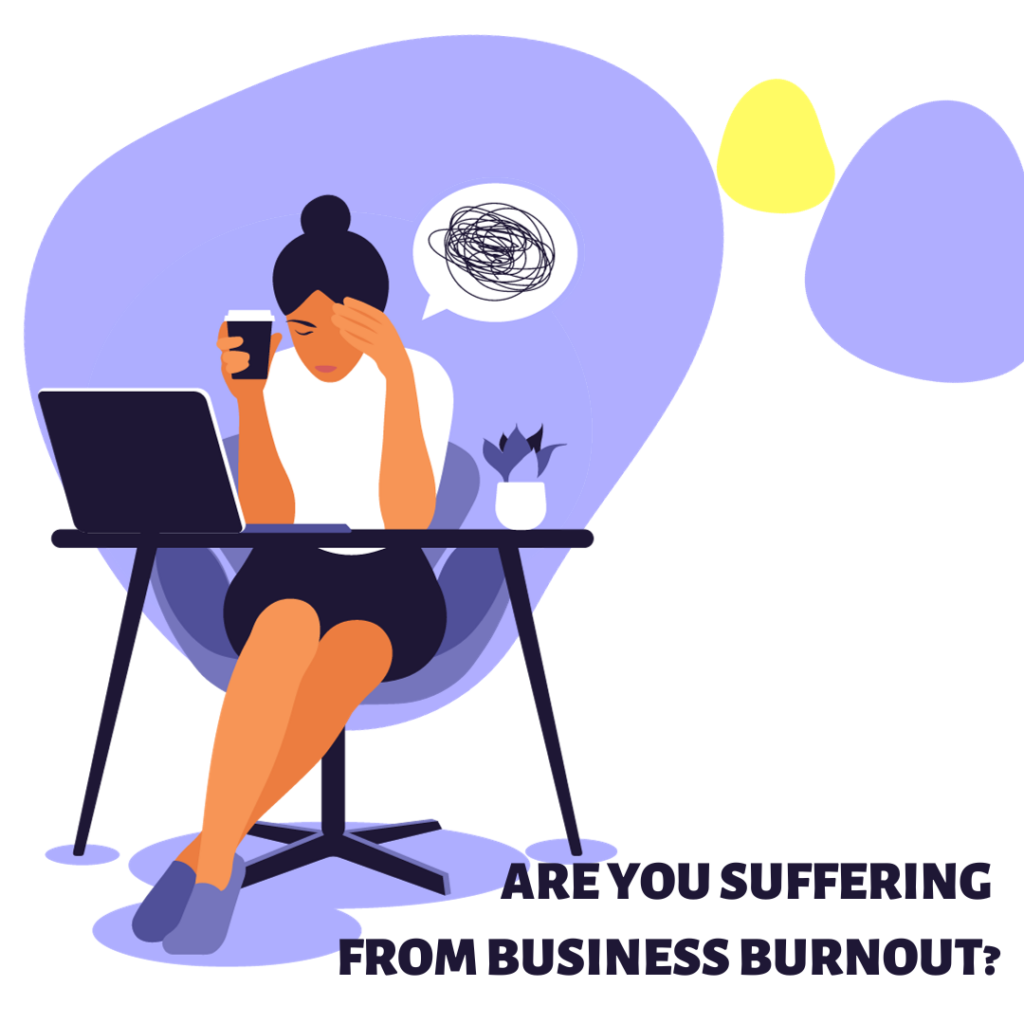
Are you suffering from business burnout?

Are you feeling burned out from business?The last three years have been demanding and exhausting for many business owners. The challenges have been relentless, and we know many small business owners have had to navigate unprecedented demands because of the pandemic and related government regulations. Burnout results from long-term stress and can manifest in emotional and physical exhaustion, which may affect your enthusiasm for running the business you once loved. What can we do about burnout? We understand that as a business owner, you have many responsibilities, and often you do everything on your own. So we know how hard it can sometimes be to keep on top of all your obligations. The most important step is to acknowledge you feel burned out and need a break. Take a break as soon as you can. Plan ahead for some time away from the business. However, while getting some rest in the short-term will help, long-term stress will take commitment to recover from. What can you do differently to avoid prolonging or retriggering the burnout? Here are some strategies to help with burnout; Delegate – Look at the low-value tasks you spend time on – can you out source some of these tasks? This will help free up some time and energy. Stand back – Take an objective look at how much you are working and how effective you are. For example, is it time to streamline your work activities and put boundaries around working hours? Reassess your goals – Do you have clear business goals for the short-term and long-term? Either set some realistic goals or revise them if they are too difficult right now. Re-energise – If you’re struggling with a lack of enthusiasm or purpose, talk to colleagues, a business coach, a farm advisor or even a friend for support. If possible, connect with people in the same industry so you can share among others who may be facing similar challenges. Commit to some regular self-care actions – Think about what you love doing outside your business that is nourishing. Regular exercise? Time in nature? Going on a retreat? Learning something for fun? Improving your diet? Get an app on your phone that reminds you to take mini breaks throughout each day. Whether that is movement, mindfulness or music, use technology to help. Celebrate milestones and achievements – When overwhelmed with stress or exhaustion, it’s easy to forget the positives. Remind yourself of just how much you have done in the last year! Need Some Support? You’ll be better able to face challenges, run your business well and assist others if you are looking after yourself well. If you’re feeling burned out and need help in managing systems, technology, payroll or any other financial planning, strategy or management, give us a call. We’re here to help and can guide you back to passionate engagement with your business. Some helpful resources for business support; Ministry of Business, Innovation & Employment – Support for businesses EAP Services – Support for organisations Rural Support Trust – Help & Support for Rural People Business.govt.nz – Resources & support for businesses

Are you suffering from business burnout? Read More »

Scroll to Top