CooperAitken Admin

Buying a farm and sharing up – what are my options?

Deciding which dairy company to supply when buying a farm is an important decision when it comes to shares. Dairy company shares make up a substantial part of a farm purchase. For an average sized Fonterra farm to be fully shared up producing 100,000 kg/ms at $6.00 per share equates to $600,000. There is the option to supply a dairy company where no share purchase is required. This is viewed by many as an attractive option. Without the need to invest in shares, a farmer significantly increase’s available working capital, and with that they significantly increase their options. Imagine buying the farm you have dreamed of sooner or expanding into a larger farm with the funds that would have otherwise been used to purchase shares. To remain competitive and assist farmers with purchasing shares Fonterra has revised and introduced new share purchase options. The aim of these is to remove the requirement to be fully shared up on day one. Fonterra Strike Price contract Under the Strike Price contract farmers have up to nine years before they have completely paid for their shares. Farmers purchase 20 percent of the shares up front based on an estimate of the first three season’s production. The requirement to purchase the remainder of the shares is only when the farm gate milk price goes above the strike price, currently set at $5.25 kg/ms for the 2018/2019 season. For an average farm producing 100,000 kg/ms the initial share up of 20 percent would be 20,000 shares at an average of $6.00, which totals $120,000. The requirement to purchase shares in the current season at the milk price of $6.40 and the current strike price of $5.25 is a difference of $1.15. Of the $1.15, 50 percent would be required to purchase shares, and would total $57,500 (57.5 cents @ $100,000kg/ms). At the end of season one, the farmer would have paid $177,500 for shares and at $6.00 per share, own 29,583. At the current strike price this equates to just under one third of the total shares required to back milk production at an estimate of 100,000 kg/ms. The current Strike Price contract lasts for a minimum term of six years. If farmers are not fully shared up at the end of the six years, they will need to buy at least one-third of their remaining shares in each of the subsequent three years. If they cease supplying Fonterra before the end of the full term they may be required to pay compensation. Share up over time contract Another option is the Share up over time contract. This offers two options the three year contract or the six year contract. The three year contract requires the farmer to purchase the shares over three years with a minimum of one third per year, based on estimated production. Under the six year contract shares are only required to be purchased in seasons four, five and six – effectively deferring the requirement to purchase shares. The number of shares required to be purchased is calculated as equal to one third of the average actual quantity of milk solids supplied in seasons one, two and three. Similar to the Strike Price contract there are minimum contract requirements that apply. As outlined the Fonterra share options are different and appear to offer some flexibility for sharing up in the Co-operative. In addition, the option still remains to supply a dairy company where no share up is required at all. In reviewing which option is right for you, it is important to consider: Estimating milk production. Commitment to supply Fonterra. Budgeting for share purchases and dividends. For every paid share the Fonterra dividend is payable (even if you are not fully shared up). Taxation Payments – the purchasing of shares is a capital item even when it is spread over time. If funding shares out of cash flow, remember to budget for tax payments. Bank – understand how your bank capitalises the share transaction under the various share up options, as the banks differ in their treatment. In deciding which option is right for you, there is no one size fits all approach and what works for you may be different than what works for the neighbour.  Please contact your rural professional if you would like further information on deciding what option is right for you.       Amy Coombes CooperAitken Accountants amy@www.cooperaitken.co.nz 027 715 2728 

Buying a farm and sharing up – what are my options? Read More »
New Provisional Tax Rules

New Provisional tax rules have come into force for the 2018 income tax year.  The two major changes provide not only a simplification of the provisional tax rules but also opportunities for tax payers to manage their provisional tax liabilities much more effectively. Change One – Safe Harbour One of the most significant changes is an increase in the level of income tax threshold for the application of use of money interest applies; this is referred to as the ‘safe harbour’.   Previously the threshold was $50,000 and only applied to individuals, i.e. not Companies or Trusts. The changes increase the safe harbour from $50,000 to $60,000 of residual income tax or RIT which is the amount of final or terminal tax a taxpayer has for an income tax year. The RIT is the total amount of tax on taxable income less tax credits such as PAYE, RWT and Imputation Credits. More significant is the extension of safe harbour to non-individual taxpayers also, meaning that Companies and Trusts can now also benefit from this safe harbour threshold. One of the key elements of the safe harbour rule is the requirement to pay provisional tax based on standard uplift.  Standard uplift assumes that the amount of RIT that a taxpayer will be required to pay will be slightly higher than the previous year.  It is worked out as 105% of the prior year RIT or 110% of two years prior.Change Two – Application of use-of-money interest (UOMI) The second significant change is for those taxpayers who fall outside the $60,000 threshold for safe harbour.  For taxpayers that are not within the safe harbour threshold of $60,000 UOMI will only apply from the third provisional tax payment date so long as they make payments at the first and second dates based on standard uplift. Practically this means that provisional tax payment one and two should be made based on the standard uplift method with a top up at the third provisional tax date.  As the third provisional tax date falls after the end of the financial year, it is anticipated that tax payers should be able to forecast their total tax liability for the year with a reasonable amount of accuracy and therefore significantly reduce any exposure to UOMI. Opportunities These new rules provide a significant opportunity to manage the timing of provisional tax payments for the 2018 year.  This is particularly the case where the 2016 income tax year resulted in losses or only a small amount of profit.  In this situation, by managing the timing for filing the 2017 income tax return, provisional tax can be all but deferred to being paid at the third provisional tax date at the earliest.  If there are significant losses brought forward to the 2017 year it may, in some cases, be possible to defer any tax paid to the terminal tax date which could be as late as April 2019. Example 1 – 2018 RIT over $60,000 Mr and Mrs Farmer are dairy farming in the Waikato and run an average sized dairy farm through their company Waikato Farmer Ltd.  They hold the shares as follows, one share each personally with the balance held by their Trust, a typical scenario for most.  The company along with Mr and Mrs Farmer all have May balance dates. Due to the dairy downturn, the 2016 year resulted in a small profit of $15,000 for the company after shareholder salaries.  Minimal shareholder salaries of $14,000 were paid to Mr and Mrs Farmer to utilise the lowest tax rates. After preparing the financial statements in June for the year ended 31 May 2017, there has been a slight improvement with a profit before shareholder salaries of $120,000.  It is decided to declare shareholder salaries of $48,000 to each shareholder leaving profit in the company of $24,000.  The 2017 income tax returns for Mr and Mrs Farmer and the company have not yet been filed. Looking at the estimated profit for the 2018 year, based on production to date and the current pay out it is expected that the profit will return to a more normal level of $320,000.  Assuming salaries of $48,000 will be declared to Mr and Mrs Farmer again, this will leave profit of $224,000 for the company. If the 2017 income tax returns are held and filed during March of 2018, which with a tax agent is the latest that they can be, then the tax payments due under the new rules will be as follows;   Mr Farmer Mrs Farmer Waikato Farmer Ltd Total P1 – Oct 28 2017 $0 $0 $1,540 $1,540 P2 – Feb 28 2018 $0 $0 $1,540 $1,540 P3 – June 28 2018 $7,791 $7,791 $59,640 $75,222 Terminal – April 7 2019 $(371) $(371) $0 $0 At the two first provisional tax dates the amount required to pay is calculated based on 110% of 2016, given that the 2016 year income was below the provisional tax threshold then the amounts will be zero.  Once the tax returns for 2017 have been filed there is an increase in the amount required to pay at the third date which is now based on the new uplift amount of 105% of 2017 less any payments made. The third payment for the company is a top up payment to prevent any UOMI.  Under previous rules it would have been necessary to pay the total amount of tax expected for the company at each of the three payment dates which would have been $20,907.  This is a significant deferral for cash flow purposes. Example 2 – 2018 RIT under $60,000 Assuming all the same facts as above but the company profit the 2018 year is expected to be $250,000 before shareholder salaries of $48,000 each leaving a profit for the year of $154,000.  The deferral of income tax is even greater as per below;   Mr Farmer Mrs Farmer Waikato Farmer Ltd Total P1 – Oct 28 2017 $0 $0 $1,540 $1,540 P2 – Feb

New Provisional Tax Rules Read More »

Farm House Deductibility Changes

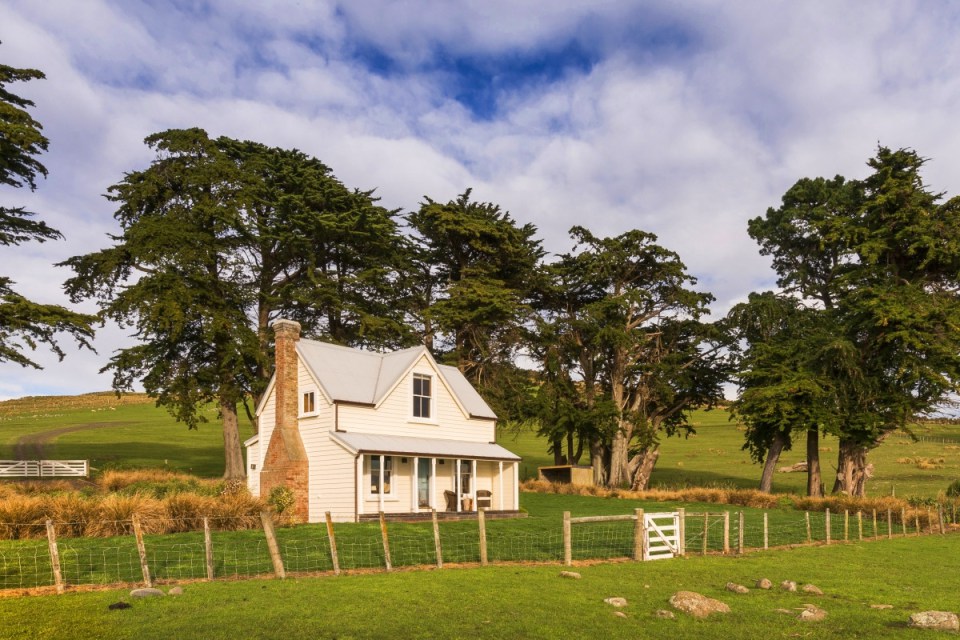
The Commissioner of Inland Revenue has recently announced changes to the deductibility of farm house expenditure for farmers.  For the majority of our clients there will only be a change in the default percentage that can be claimed from 25% to 20%.  However for a small group where the value of the farmhouse is greater than 20% of the value of the farm the change will be much more significant. Type 1 vs. Type 2 The approach that has been developed by the Commissioner distinguishes between a Type 1 and Type 2 farm based on value of the farm house compared to the value of the farm. In summary: farming businesses where the value of the farmhouse (including curtilage and improvements) is 20% or less of the total value of the farm are Type 1 farms; and farming businesses where the value of the farmhouse (including curtilage and improvements) is more than 20% of the total value of the farm are Type 2 farms. To determine the value of the farmhouse (including curtilage and improvements) and farm the Commissioner will accept a formal valuation or a reasonable estimate of the values of the farmhouse (including curtilage and improvements) and farm. To reduce compliance costs, the respective original costs of the farmhouse and farm may also be used to determine whether the farm is a Type 1 or Type 2 farm. The term “curtilage” refers to the land surrounding the farmhouse that is used primarily for private purposes. The curtilage may be fenced (like a backyard) or not. If the curtilage is not fenced, the Commissioner will accept a reasonable estimate of the curtilage area and its value.  Improvements would include things such as swimming pools, tennis courts and sheds used privately. Deductions for a Type 1 farm Farmers who live in the farmhouse on Type 1 farms may determine whether expenses are deductible based on assessment of the relationship Statement. However, the Commissioner will also accept that 20% of the farmhouse is used for business purposes without any supporting evidence. As a result, such farmers can claim 20% of all farmhouse expenses as deductible business expenses.  This covers the expenses that were previously being claimed at the rate of 25%, expenses such as electricity, insurance and repairs and maintenance. In addition you may now only claim 50% of the cost of their telephone and internet charges down from 75% previously, unless you can justify that the percentage should be higher. Type 1 farmers may continue to claim 100% of the interest costs relating to the farmhouse and 100% of rates. Deductions for a Type 2 farm Farmers who live in the farmhouse on Type 2 farms must determine whether expenses are deductible under the general permission and general limitations as set out in this Interpretation Statement. For farmers operating Type 2 farms, there is no minimum percentage of the farmhouse that the Commissioner will accept as being for business purposes. Farmers operating Type 2 farms may only claim deductions for expenses, including interest and rates, relating to the actual business use of the farmhouse.  There is also the same limit of 50% of the cost of their telephone and internet charges down from 75% previously, unless you can justify that the percentage should be higher. Calculating actual use When apportioning expenses between the business and private use of the farmhouse, Type 2 farmers must undertake a “home office” calculation like any other taxpayer who carries on their business from home. This calculation must be based on the actual use of the farmhouse (for example, on a time and space basis), regardless of whether there is a dedicated home office or different parts of the house are used in the business. The following is an adapted example of how to calculate the “home office claim” in the situation of a non-dedicated office. “The farmhouse does not have a home office. Instead, the taxpayer holds business meetings at the kitchen table and manages the farm accounts from the family computer in the dining room. In addition, they sometimes prepares lunches for business visitors in the farmhouse kitchen. The partnership can claim deductions for the business proportion of expenses relating to the farmhouse. The partnership’s telephone bill lists the toll calls made each month and can only claim a deduction for the calls made for business purposes. For the fixed telephone charges, there is a claim for 50% of the fixed telephone charges unless they can show that the actual business use of the telephone is greater than 50%. The floor area of the house is 150m2. Together, the dining room and kitchen make up 40m2 in total, or 27% of the floor area of the farmhouse. They calculate, on a fair and reasonable basis, that these rooms are used for the farm business for 20% of the time. This means that the business use of the farmhouse is 5.4%.” Practical application Where you are preparing your own GST return we recommend that the percentage change is made for your next return, this might require some changes to any auto coding.  However as the amounts are likely to be immaterial any adjustments required will be made upon preparation of your year-end accounts. If you have any questions, would like us to review your assessment of Type 1 vs Type 2, or assistance in changing any auto coding please contact your usual CooperAitken contact.

Farm House Deductibility Changes Read More »

Scroll to Top