CooperAitken Admin

The tax battle: Property Investor vs. First-Home Buyer?

The Government’s latest announcement regarding changes to legislation in response to soaring house prices will affect existing and future property investors as well as the first-home buyer.  It is clear the government are making the ownership of rental properties less attractive with use of the taxation system.  The potential impact being the exit by these investors and in turn providing housing stock that would be available for First-Home buyers to then purchase. The removal of interest deductibility will have a significant impact on both the return on investment and free cash flow from investment properties with a high level of borrowing.  There is already the impact of ring fencing of residential rental losses being felt by investors, this however, is a significant deviation from the long established concept of being able to deduct interest costs where the borrowing relates to earning income. The extension of the bright-line was widely expected; many picked ten years was the next logical step for increasing the proportion of property caught in what is essentially a capital gains tax.  This will have an impact beyond just investment properties. In particular, some lifestyle properties and holiday homes will become subject to tax if sold within a ten year period and a gain is made.  Less expected was the inclusion of a change-of-use rule for the bright-line test.  This means that if the property is not used as a main home for a period longer than 12 months it would be subject to tax for the proportion of time not used as a main home if sold within the bright line period and a gain is made. The Government’s detailed announcements are as follows: Bright-line test extended to 10 years which means that people who buy and sell investment property within 10 years will need to pay income tax on any gains made from the sale. The Bright-line test looks at whether the property was either: Purchased on or after 1 October 2015 through to 28 March 2018 and sold within 2 years Purchased on or after 29 March 2018 and sold within 5 years Purchased on or after 27 March 2021 and sold within 10 years The family home and any inherited property will continue to be exempt from the bright-line test, and the bright-line test for new build investment properties will remain at 5 years. Interest deductibility on investment property removed, therefore property investors will no longer be able to deduct the interest on the loans used to purchase the property from their rental income as an expense. The legislation will apply from 1 October 2021. Interest deductions on residential properties purchased on or after 27 March 2021 will not be allowed from 1 October 2021. Note that interest on loans for properties purchased before 27 March 2021 will remain deductible but the amount you will be able to claim will be reduced over the next 4 years. At the end of the 4 year period none of the interest on the loan will be deductible for income tax purposes.  There would however, be an exemption for newly built homes. $3.8 billion Housing Acceleration Fund set aside to aid the funding of infrastructure around housing developments. Price and income caps raised for the Government’s First Home Grants and First Home Loan which means that more first-home buyers will be eligible for the existing First Home Grant and First Home Loan. The Government will also help Kainga Ora to borrow an additional $2 billion to aid in strategic land purchases to enable the building more affordable state housing. It is disappointing to see the continued use of tax measures to try to control house prices resulting in different taxation outcomes within a group taxpayers. The risk of creating distortions in investment decisions and the unintended consequences are high when taxation is used as a lever.  Each business owner and/or investor will have a range of structures and operating models.  When tax policy is targeted at a desired outcome, this is likely to create unexpected results for different taxpayers depending on their particular situation. As with any tax change, the devil is in the detail and the impacts of these changes will become better known over time.  If you would like to discuss your particular situation and review how these changes may affect you and your business, please contact our office to discuss further.

The tax battle: Property Investor vs. First-Home Buyer? Read More »

Upcoming Tax and Legislation Changes

“The Taxman giveth and the Taxman taketh away” an adage that has always rung true. We are entering a new financial year which brings with it changes to legislation which will be favourable for some taxpayers but not so much for others. A new top tax rate of 39% will apply to all employment income over $180,000. Whilst a new tax rate and threshold may seem quite simple to enact, in reality quite the opposite is true and a number of additional legislative changes are also required. The additional changes are required to ensure that all types of personal income tax are taxed at the same rate. Other tax types that will be changed to align with the 39% tax rate are as follows: Secondary Tax Codes – a new tax code (SA) for secondary employment earnings of an employee whose total PAYE income payments are more than $180,000. A new top FBT rate of 63.93% will apply to all-inclusive remuneration exceeding $129,681. Employer Superannuation Contribution Tax (ESCT) and Retirement Savings Contribution Tax (RSCT) will rise to 39% Resident Withholding Tax on Interest– a new 39% rate being introduced which mirrors the new top personal tax rate. A new 39% rate will be used where a taxable Maori authority distribution of more that $200 is made where the Maori authority does not have a record of the IRD number of the member to whom the distribution is made. Note the above changes come into effect on 1 April 2021 with the exception of the change in the Resident Withholding Tax rate which will only apply from 1 October 2021. The 39% tax rate creates complications in the tax system as it creates a larger variance between the various tax rates, for example a company is 28%, a trust 33% and now the highest personal tax rate is 39%. Provisional Tax for individuals who are affected by the rate change will need to be reviewed and adjusted throughout 2021 to account for the additional tax payable. The following are examples of what items need to be addressed prior to the rate change: Distribution of retained earnings in companies, especially where the shareholding is held at a personal level and the shareholder has income of close to or over $180k per annum Review investments to ensure that they are in the correct entity from an tax efficiency perspective Lastly, though it may be possible to change business structures under our current laws in relation to tax for companies and trusts to mitigate the rate change, Inland Revenue has issued a warning that it will be monitoring any structure changes carefully to ensure there are no changes to structures that constitute tax avoidance. Trusts will have Increased Disclosure Requirements with Inland Revenue for their annual returns from the 2021 year going forward. Information to be disclosed will include: Distributions to beneficiaries both taxable and non-taxable, beneficiary names and IRD numbers and any other information the IRD consider relevant to distributions made. Settlement information which will include the names, date of births and IRD numbers of settlors and trustees will also need to provide the names of settlors from prior years if the information is not already known to the IRD. Information in relation to whom holds the power per the trust deed to dismiss or appoint trustees, add/remove beneficiaries or make changes to the trust deed. Profit and loss statements. Balance sheets. The information as disclosed to Inland Revenue will be used to gain a clear picture of how a trust is being used whether there was any change in the usage of the trust due to the 39% tax rate change for individuals. Inland Revenue holds the power to request the prior 7 years’ worth of information should they deem it necessary. The new disclosure requirements will not apply to non-active or charitable trusts. Minimum Family Tax Credit threshold will increase from $27,768 to $29,432 per annum for the 2020 – 2021 and subsequent years which equates to an increase of $32 per week. As part of the new legislation it has also been clarified that the Commissioner of the Inland Revenue can request information from tax payers to assist with the development of tax policies, however the IRD has advised that a request for additional information will be approached on a case-by-case basis. As part of the government’s Covid-19 response the threshold of low value asset write offs was increased from $500 to $5,000 and took effect on 17 March 2020. This allows for immediate depreciation of assets purchased that cost less than $5,000. We would like to remind tax payers that this concession expires on 16 March 2021, you therefore have limited time to utilise the threshold if any capital expenditure is required. For assets purchased on or after 17 March 2021, the threshold will be permanently increased from $500 to $1,000. The depreciation rates for commercial and industrial buildings which was previously set at 0% has been changed to 2% which is in essence reverting back to a depreciation rate that was available pre-2011. Residential buildings however are not part of the depreciation rate changes, and remain non-depreciable for tax purposes. The reintroduction of depreciation on commercial buildings will help building owners with cash flow in the short term as well as to encourage tax payers to invest in new and existing commercial buildings. The Small Business Cashflow Scheme (SBCS) has been extended to 31 December 2023 and a number of changes have also been made to the scheme (changes took affect 28 January 2021) which are as follows: The loan will be interest free if the loan is repaid within two years, previously it was one year. Limitations on how the loan can be used have eased, the loan can be used for core operating costs and businesses will be able to choose to use the loan to invest in their business to aid the business in adapting to the impact of Covid-19. Businesses or organisations that

Upcoming Tax and Legislation Changes Read More »

New Trust Act 2019

For many years New Zealanders have had an affinity with Trusts as an ownership structure. Reasons have included protection from business activity (creditors, business compliance risk etc.), government (taxes or means testing), relationship matters or simply management of wealth to future beneficiaries. There is limited information on the exact number of trusts in New Zealand as there is no formal requirement to record in a register like companies. However the Inland Revenue is gathering more information with all property owning trusts now requiring an IRD number to register the purchase or sale of a property. We see more compliance and monitoring required going forward for Trust Management. Up to now there has been limited formal  legislation to govern the operation of trusts, instead previously relying more on case law decided through court cases. The new Trusts Act 2019, coming into force 30 January 2021, aims to provide legislative guidance for all parties involved with Trusts. With the introduction on the Trusts Act 2019, it is an important reminder for everyone who has set up a Trust to review the; Original Trust deed and any later updates, Trustees, Beneficiaries of the Trust, their classes and rights, Property held by the Trust, Current operation of the Trust in relation to original intentions and in relation to settlors wishes who have/will settle property on the Trust. Are the above points still applicable and relevant? The New Act brings in the concept on Mandatory Trustee Duties and Default Trustee Duties, as well as allowing the potential extension of the Trusts life span. Mandatory Duties will be imposed on all trustee under the legislation and can’t be contracted out of. In broad terms the Mandatory Duties require Trustees; to know the terms of the Trust, act in accordance with these terms, act honestly and in good faith, act for the benefit of the Trusts beneficiaries, or to further the purpose of the Trust exercise powers for proper purpose In discussing Mandatory Duties with clients, common sense prevails with the comment, “That’s what the Trust was set up to achieve.” Default Trustee Duties within the legislation prescribe best practice, however allow the Trustees to contract out of (allow the deed to contain terms contrary to the legislation). Trustees should address their minds to the Default Duties and where necessary expressly modify/exclude these. Examples include; to invest prudently, trustees to act of no reward, to act unanimously, avoid conflict of interest, trustees not to exercise power for self-benefit. In reviewing Trusts with clients, the Default duties often need to be modified to achieve the Trusts original intention.The Life of the Trust (previously the Trust perpetuity period) can potentially be extended from 80 years to 125 years. In client discussions, this may not be a concern of the current trustees, however thought should be given about extending the life of the trust if it is intended to hold equity longer term for multi-generational asset management, or the wish to transfer wealth to the next generation via the Trust. In summary, it is important that a review of your Trust is completed to ensure the Trust is still fit for purpose and achieves it goals within the new legislative framework. If anyone requires assistance with Trust matters, CooperAitken have a specialist in house team focusing on Trust Administration, Trust management and recommendations for updating your trust in regard to the new legislation. We are happy to discuss Trusts with our clients and non-clients, for a set fee. Please contact us on Trustsact@cooperaitken.co.nz. DOWNLOAD A PDF COPY   Grant Eddy, Director P: 07 889 7153E: grant@cooperaitken.co.nz 

New Trust Act 2019 Read More »

Termination Pay & Redundancy

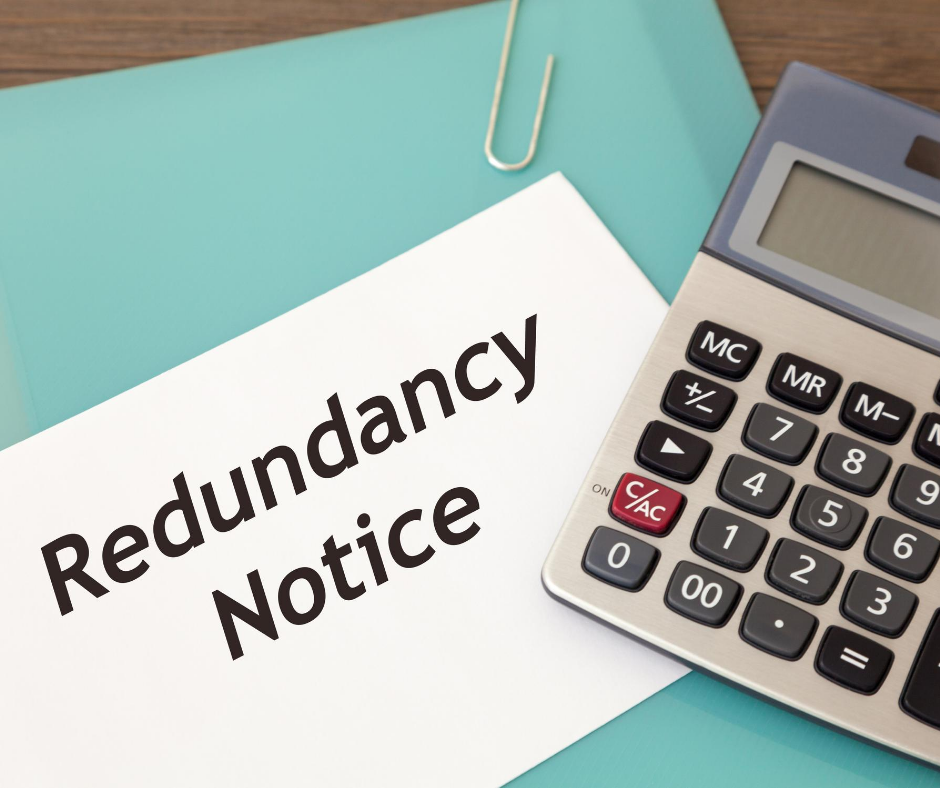
WHAT IS TERMINATION PAY? Termination pay is another name for the final payment an employee receives when their employment ends. It differs from regular pay because it includes: Any time worked since the last pay period. Any leave entitlements owed to the employee. Any other contractual benefits such as notice periods or redundancy compensation. Any other agreed payments, such as a bonus or commission. It is paid on their last day of work, or no later than the next pay period from the actual termination date. An employment agreement will usually state when termination pay needs to be processed, so it’s best to check and confirm. TIPS TO STAY COMPLIANT WHEN CALCULATING FINAL PAY Before we get into the calculations, here are three tips to get you started. Review the employee’s employment agreement. Keep an eye out for anything that’s non-standard to make sure you’re not breaching any contractual obligations. Some of the less common entitlements you might come across are long service leave and redundancy compensation but benefits can vary between companies. Determine whether an employee has worked more or less than 12 months for your organisation. It’s important to make this distinction as it will impact how termination pay will be calculated. Include a breakdown in the employee’s final payslip. This demonstrates compliance and shows the employee that their final pay is accurate. They will also feel confident that they’re receiving all their entitlements. HOW TO CALCULATE LEAVE ENTITLEMENTS Employees that have worked for less than 12 months: If an employee has worked for less than 12 months, the calculation is straightforward. They should be paid 8% of their gross earnings since they started employment, minus any annual leave that was taken in advance or paid on a pay-as-you-go basis. You’ll also have to pay out any contractual benefits owing. Employees that have worked for more than 12 months: For someone that has worked longer than 12 months, it gets a little more complicated. In this case the employee’s leave entitlements will be made up of three things: Any annual leave entitlement owing Any public or alternative holidays owing Any annual leave accrued WHAT IS ACCRUED ANNUAL LEAVE? Accrued annual leave is the leave someone earns up until they get their full four-week entitlement. The Holidays Act 2003 states that employees only become entitled to their four weeks of annual leave every 12 months, so accrued leave is a useful tool to show you how your employees are progressing towards their full four-week entitlement. Imagine someone has worked in a role for 18 months. If their employment ended at this point, they would receive their four week entitlement at 12 months, and effectively six months of accrued leave in their final pay. Any annual leave they had taken in advance would be subtracted from their leave balance. HOW TO CALCULATE ANNUAL LEAVE ACCRUAL FOR FINAL PAY Let’s break this calculation down into four steps: Calculate the employee’s gross earnings from when they last received their annual leave entitlement to the date their employment ends. Add the value of any unused annual leave, public holidays and alternative holidays owing to these gross earnings. Work out 8% of this sum Subtract any annual leave taken in advance or paid on a pay-as-you-go basis SOMETHING TO LOOK OUT FOR…. On termination, an employee’s final day of work is notionally extended by any annual leave entitlement not taken. This is to determine if an employee is entitled to public holidays that fall within this extended period. It has nothing to do with notice periods and is different from the date on which the employment agreement is terminated. This means that if an employee had three weeks of annual leave owing, an employer would need to add three weeks to the employee’s end date. If a public holiday fell within this three-week notional extension, and the employee would normally work on that day, the employer would need to account for the public holiday in the employee’s final pay. WHAT ABOUT REDUNDANCY? When it comes to redundancy, it’s essential that a valid workplace change process is followed. Here is a breakdown of the key steps all employers should complete before making an employee redundant: Create a business case for the proposed redundancy. Ensure this is supported by accurate and relevant evidence. Document your business case and present it to the employee with all potential options in a workplace change proposal. Give the employee an opportunity to consider the proposal, seek advice and have their say. Genuinely consider any feedback the employee provides. Make a business decision and present it to the employee in writing. DO YOU HAVE TO PAY REDUNDANCY COMPENSATION? There is no legal obligation to pay redundancy compensation to an employee. However, compensation may be agreed on in the employment agreement. Your payroll team will need to know exactly what is in the employment agreement to accurately process final pay for redundancy. Tip: Employees will still be entitled to work, or be paid, their notice period, even if they aren’t entitled to redundancy compensation. If you want to pay out some or all the employee’s notice period, you should first check to see what the notice period is in the employment agreement and whether it allows for the notice period to be paid in lieu of notice. WANT TO KNOW MORE? Termination pay is a particularly tricky topic as there can often be emotions involved and this can push payroll to the side. However, it’s important to keep payroll top of mind when considering any kind of termination. If you have any questions about final pay or what the Cooper Aitken Wages Team can do to make your payroll even easier, please get in touch today, as we would love to help you! Disclaimer: The content of this article is general in nature and not intended as a substitute for specific professional advice on any matter and should not be relied upon for that purpose.

Termination Pay & Redundancy Read More »

Reducing an Employee’s Pay or Hours

What does it mean when you reduce an employee’s pay or hours? The current pandemic has seen a lot of confusion for employers as well as for employees about what happens when hours or pay are reduced. So, first things first, in general terms, an employer cannot reduce an employee’s pay or hours without first consulting with them and getting their agreement. In this post, I want to cover what it means for payroll when you reduce pay or hours for an employee (with the employee’s agreement). It is not as straightforward as many employers and HR believe and it is impacting on the work we are doing in payroll. Just to make it clear, the examples I am using are regarding minimum entitlement by law. The employer can always do better (if that’s possible in the current environment we are all facing). I have had so many queries that start with “management has decided to pay 80% of what we usually pay our employees during lockdown”.  My first question is always has this been agreed by the employee and 50% of the time the answer is NO. It now means the employer is running around trying to get that agreement in place (after the fact).  And, if the employee does not agree, then the employer must pay what has been agreed. If there is no way this can be done, even if the wage subsidy is to be applied, it could mean the only option after everything else has been looked at is redundancy (there is a process to follow here). Now for the other 50% of employers that did get agreement from employees to reduce pay and or hours, as this can be done several ways, there is a second question that needs to be asked: what have you agreed?  I will use an 80% reduction to explain this: Have you agreed to reduce the employee’s pay by 80% only?  Or, have you agreed to reduce the employee’s pay and hours by 80%?  If you have agreed to reduce hours, what has been agreed? The employee normally works 40 hours per week, Mon to Fri 8 hours per day and this is now reduced to 32 hours, Mon to Fri 6 hours per day.  Or, the employee normally works 40 hours, Mon to Fri 8 hours per day and this is now reduced to 32 hours, Mon to Thurs 8 hours per day. For payroll, if the employee is at home (lockdown) and cannot work and there is an agreement to pay 80% of what they normally would get paid (the wage subsidy can be used for this), this is straightforward as it is a clear reduction in pay and is not about changing hours. If there is any agreed change to hours, then it is an issue for payroll because a week is by agreement and that means the week has now changed from the requirements of the Holidays Act.   So, using the previous example, if the week has now been reduced to 80% (32 hours), then that means the week for annual holidays is now an agreed 32 hours per week.  For payroll, any entitlement earned (not accrual, 8%) would need to change to reflect the new week. So, 3 weeks of entitlement based on a 40-hour week (120 hours) would now become 3 weeks of 32 hours (96 hours).   If the employee applies to take annual holiday (entitlement), or if the employer uses Section 19 to get the employee to take annual holiday entitlement (giving them not less than 14 days’ notice) after agreeing to the change in the week, this is the impact on the employee.  In payment terms, there should not be a real change as AWE will still be based on the week going back 52 weeks (the longer the change, the more impact there will be), but OWP Section 8(1) will now reflect the new agreed week. Now, changing hours will not just affect annual holiday entitlement. If you change the day (hours in a day) or the days of the week, it will also create some issues for payroll. Using the example from before: The employee normally works 40 hours, Mon to Fri 8 hours per day and is now working 32 hours, Mon to Fri 6 hours per day.  Or, the employee normally works 40 hours, Mon to Fri 8 hours per day and is currently working 32 hours, Mon to Thurs 8 hours per day. If the employee agrees to change from an 8-hour day to a 6-hour day, then that means if they go sick RDP is based on the 6-hour day and what would have been paid on that day.  This also has an impact if the day is a public holiday. And so if the employee is at home but can’t work, then the day will be a public holiday taken at RDP based on the 6-hour day.  There have been a few lawyers stating as they are at home during the lockdown, they would not get the public holiday. I disagree based on what has been agreed between the employer and employee. If it has not been agreed upon, then I would always provide the benefit to the employee. (It is up to you whether to do this, but I do believe it is on the employer to clearly define the agreement and to then get the employee’s consent and not rely on the gray areas where lawyers live).  Now, the other issue is when the days agreed have changed by agreement. Using the example above instead of 5 days, it is now agreed to reduce working to 4 days (instead of Mon to Fri, days worked are now Mon to Thurs).  For payroll, it means if there were a public holiday on a Friday that is no longer a working day for the employee, and they would not get paid for a public holiday taken. In conclusion, it’s not that simple for

Reducing an Employee’s Pay or Hours Read More »

The end of the cheque payment as we know it

Inland Revenue (IR) and the Accident Compensation Corporation (ACC) are calling ‘time’ on cheques as part of the governments’ voyage into the digital age From March next year, IR and the ACC will no longer accept payments by cheque from customers who are able to use alternative payment options. Inland Revenue Deputy Commissioner Sharon Thompson says New Zealanders are already embracing the digital world and IR wants to do everything it can to help customers switch seamlessly to cheque alternatives. “Cheques are part of a paper-based world and don’t mesh with the increasingly digital world we now operate in. The number of cheques being used is spiralling down and will continue to trend that way. Electronic payments are simpler, easier and safer,” Sharon Thompson says. “IR already has a number of alternative ways for people to pay their tax bill. We want to help as many as possible shift to those before the technology used to process cheques comes to the end of its working life next year. From 1 March 2020, IR and the ACC won’t process any cheques if customers have an alternative payment option available, the IR will also not be accepting post-dated cheques dated 1 March or later. Both the IR and the ACC will be supporting customers to transition to alternative payment methods, whether that be face to face, over the phone or with written material. IR- Options for payment: Electronic via internet banking or direct debit in MyIR. Paying this way minimises delays and includes a formal notification of the date and time the payment was made to Inland Revenue Customers can make payment by debit/credit card over the phone, through the unauthenticated payment page on the Inland Revenue website, and through myIR. (Convenience fee of 1.42% will be charged) Cash or eftpos are still payment options but only at Westpac branches. Payment not accepted at Inland Revenue offices If you require assistance or training to make online payments to the IRD, please call us to arrange. If you require internet access to make a payment at any stage, please call into the office so we can assist you. If option three is your preferred payment method, IR has further requirements that will take effect as of 1 July 2020 in relation to payments made at any Westpac Branch which is as follows: As of 1 July 2020, all payments at Westpac must be accompanied by a barcode. The barcode is a more reliable way of passing your details to Westpac and will prevent your payment going to the wrong place in the account, or potentially even the wrong person’s account.  IR are adding barcodes to notifications where they’re requesting you to make a payment. If you misplace your barcode, you can generate one using the barcode generator on their website.  You will need your IRD number, the tax type and the period of the payment. You can then either print it off or show it to Westpac staff on your smartphone.  Link for specific details in relation to payment options to IR below: https://www.cooperaitken.co.nz/methods-of-payment-to-replace-cheques/ ACC – Options for payment: MyACC for Business is the ACC online portal which makes it easy for business customers to set up and manage their payments Pay online on the ACC website by a Credit card (Convenience fee of 1.9% will be charged) Electronic via Internet banking Direct debit – can be set using MyACC for Business or by filling out the appropriate ACC Direct Debit form – Instalments of 3, 6 or 10 months – this payment option includes a 5.4% admin fee Cash or eftpos payments are available only at Westpac branches. Payment not accepted at ACC offices If you require assistance or training to make online payments to the ACC, please call us to arrange. If you require internet access to make a payment at any stage, please call into the office so we can assist you. Link for specific details in relation to payment options to ACC below: https://www.acc.co.nz/for-business/received-an-invoice/ways-to-pay-levies Please contact us so we may help you set up the most appropriate payment option for you.

The end of the cheque payment as we know it Read More »

Ring fencing of Rental losses

Originally signaled in March 2018, in a discussion document, draft legislation to introduce the ring fencing of rental losses has been released just in time for Christmas.  The rules that are proposed will bring to an end the ability for taxpayers to offset losses from a rental property against their other sources of income.  The ability to do this has been perceived as an unfair tax advantage to rental property investors and coupled with other recent changes will further discourage involvement in being a land lord.  As background, where a rental property was in a loss making position (often due to interest costs) those losses were able to be offset against other sources of income.  This was often structured to allow individuals to utilise the tax loss against their salary and wage income to receive a tax refund.  The loss incurred by the taxpayer in this situation was real and the offsetting of the loss against other sources of income consistent with the principles of the tax system.    The removal of the ability to offset rental losses against other sources of income will instead mean that those losses must be ‘ring fenced’ and carried forward to be offset against future rental profits or income from the taxable sale of land, i.e. under the bright-line test or the subdivision rules.  Application date  These rules will apply for the 2019/2020 income tax year, for most taxpayers this will mean an application date of 1 April 2019.   Features  Some of the key features of the proposed rules are;  It will apply to “residential land’ by utilising the definition from the previously enacted bright-line test.  Much like the bright-line test there will be an exemption for properties used as a main home, properties classed as farm land, land used predominantly as a business premises and certain employee accommodation.  There will also be further exemptions for properties that fall under the mixed-use asset rules i.e. holiday homes.  The rules will apply on a portfolio basis allowing losses from one rental property to be offset against income from another profitable rental property owned within a portfolio.  Losses that are ring fenced will be carried forward to be used against residential rental income in future years or income from the taxable sale of land.  Any unused losses will remain ring fenced.  The use of companies or other entities to try and achieve a deduction that would be otherwise ring fenced will be prevented.  Potential issues  With the legislation being a first draft there is still opportunity for the detail to change but some of the issues that will require consideration are;  Tracking of losses, will Inland Revenues new system handle this or will it be a taxpayer requirement to maintain a record of the amount of ring fenced loss.  Ensuring that the rules cope with the complexity of ownership structures for farms such that farm houses provided to employees are not inadvertently captured.  The possibility that some rental losses may be ring fenced forever if a taxpayer exits ownership of rental properties and never derives future rental income.  Opportunities  There appears to be very little opportunity between now and the application of the rules.  However consideration should be given to bringing forward any repair and maintenance work or deductible expenditure that would otherwise form a future ring fenced loss and claim a deduction in the current income tax year.  If you have any questions or wish to discuss this further, please contact our team at CooperAitken. Disclaimer The information contained herein is of a general nature and is not intended to address the circumstances of any particular individual or entity. There is no guarantee that such information is accurate as of the date it is received or that it will continue to be accurate in the future. No one should act on such information without appropriate professional advice after a thorough examination of the particular situation   Written by Rory Noorland, Director.

Ring fencing of Rental losses Read More »

Tax implications for spending on land

It is always a very exciting prospect when looking at purchasing land. But how many people buy property and are happy to move in without spending more money?   There is usually a “wish list” of items a new purchaser is keen to spend money on, and put their own stamp on it. Because the tax deductibility rules and effect of expenditure on Income Tax are not straight forward, it is good to get an understanding of these before commencing work. Usually a farmer has a really good understanding of the financial effect in relation to return on expenditure. For example, the way subdividing paddocks or adding a feed pad can help to increase production. However, how does the cost of the subdividing or the upgrading of cooling systems in the dairy shed to meet new temperature regulations affect income tax? Spending on some items will be 100% deductible. Therefore, there is an additional immediate tax benefit that may not be so for other expenditures. The question of deductibility of expenditure is not always black and white, and in fact, there are many facets to the Income Tax Act in relation to farming.  This is where involving your Accountant in your plans from the beginning will help immensely. A major source of confusion is what is “repairs and maintenance” as opposed to capital expenditure? Repairs and maintenance expenditure is deductible in the year of expense, but capital spending is usually not deductible.  The cost is depreciated over the life of the asset, and it is the depreciation which is deductible. In general concepts, repairs are generally costs for repairing or maintaining an asset, or to restore it to the original condition.  However, if the asset is improved or altered, the cost will not be deductible, but treated as a capital improvement. Here lies the problem with spending money to do up or improve a property which has been recently purchased.  Although you may be restoring the asset to its original state, the starting point is the condition of the asset at the time you purchased it.  So re-roofing the dairy shed in the first year of ownership is going to be treated as a capital expense rather than a repair, from a tax perspective. However, if the property had been owned for several years and the roof then needed replacing, it will be treated as a repair. To quantify this from an Income Tax perspective, if the cost was $10,000 and it is a repair, there would be an immediate tax saving of $2,800 (assuming the company tax rate of 28%).  However, if this $10,000 is required to be capitalised, only the amount of depreciation is tax deductible.  The depreciation rate (diminishing value) of dairy sheds is 6% so the depreciation in the first year will be $600.  The tax on $600 at 28% is $168, so this will be the tax saving in the first year. It needs to be remembered that the claim on a repair is one-off, but the depreciation claim on capital spending will continue for many years. Getting back to the problem of subdividing paddocks, this expense is fully tax deductible in the year of expenditure as fencing is one of the few items that is not required to be capitalised. One may think changing milk cooling systems to speed up the cooling of milk before collection will be a deductible expense, but actually, this is deemed to be a capital cost because of the improvements which are made. There are many other considerations required in relation to whether expenses are able to be treated as a deduction in the year incurred.  Therefore, this article addresses the general concepts only. For any specific advice, we recommend you seek advice from your Accountant. For further information, please feel free to contact our team at CooperAitken Ltd.       Coral Phillips Director CooperAitken Accountants

Tax implications for spending on land Read More »

Ring-fencing rental losses

After the recent increase of the bright-line test period from two years to five years the continued pressure being put on the rental property market through tax settings continues. Inland Revenue have recently released a discussion document to ring fence losses made on residential rental properties.  This will mean that for rental properties that make losses owners will no longer be able to offset those losses against other sources of income such as salary or wages.  Rather the losses will be carried forward to be used in future years when the rental property, or properties, make profit.       Alternatively, the losses can also be used against profits if the person is taxable on the sale of a land. The key features are; It will apply to residential land, but would not apply to a person’s main home.  The same rules as under the bright-line test. The loss ring fencing would apply on a portfolio basis, meaning losses from one rental property could be offset against profit from other properties. When losses are not fully used in a year they would be carried forward and ring fenced to residential rental income in future years or if taxable on the sale of land. The rules, as proposed, would apply from the start of the 2019-20 income year (1/4/2019) and may be phased in over two to three years. At this stage the contents of the discussion documents are proposals but we will keep you updated in future newsletters on the progress of these proposals.

Ring-fencing rental losses Read More »

Can you see the tax through the trees?

When buying or selling land, it is important to consider the tax implications of any standing timber on the property. Standing timber refers to a block of trees that will yield saleable timber.  The Inland Revenue Department (IRD) excludes fruit trees, ornamental or incidental trees. However, standing timber does include native bush, shelterbelts and erosion control planting. When standing timber is ‘disposed of’ the income is taxable, therefore it is important to know how it will be taxed and how much it will cost you. Taxable income arising from the disposal of standing timber is most evident when there is a land sale but can also occur on the death of an owner or a resettlement of a Trust. When purchasing land with standing timber on it, it is in both parties best interest to ensure the total value of the trees is recorded in the Sale & Purchase agreement. For the purchasers, this value will be deemed the cost of timber and can be claimed as an expense in the future when trees are sold or harvested. If no value is stated in the agreement, then at harvest time there could be no cost/deduction to claim against this income. For the vendor, this value will be income at settlement date. It is important to note that the purchaser could obtain a valuation at the time of purchase of the farm, if the agreement is silent on the value of the trees. This will then give the purchaser a cost value to offset income when the forest is harvested.  In order to do this, ensure you retain any valuation agreed upon and the methods undertaken to value the trees. Under this circumstance, the vendor could become liable for a deemed sale of trees based on the purchasers valuation. Overall if the agreement includes a value, both parties know where they stand from a tax perspective for the trees. The taxable income arising from the sale of the trees is the sale price of the timber less any costs not already claimed as an expense i.e. the purchase price of the trees and harvesting costs. There are special rules for when income from trees is assessable to the IRD. Under section EI 1 of the Income Tax Act 2007, the IRD allows you to spread the proceeds over the year of disposal and any one or more of the previous three income years from the year the sale proceeds were realised. This is done by an application to the IRD within 12 months of the end of the income tax year in which the sale occurs. If the application is approved then you must also apportion any allowable deductions for the cost of the timber over the same periods. The IRD has concessions and you will not be disadvantaged by reassessing prior income tax year returns as a result of spreading the income backwards. The tax savings from opting to spread the net tree income depends on your level of taxable income.  If you haven’t used up your lower tax rates in the years available to spread the income then there will potentially be tax savings available. An example of this is: 2018 income year trees are sold and the taxable income less expenses totalled $50,000 You apply to spread some or all of this profit over the prior three income tax years Your taxable income in was 2016 $20,000 and in 2018 it is $100,000 (excluding the $50,000 timber income) You apply to spread half of the timber income to the 2016 year and the remainder in the 2018 tax year Overall tax saving would be approximately $3,875 There are other important provisions to consider surrounding stander timber that have not been discussed in this article, such as carbon tax credits and the emissions trading scheme. For further information, please do not hesitate to contact our team at CooperAitken Ltd.     Carissa CressyDirectorP: 07 888 8002M: 021 448 240E: carissa@cooperaitken.co.nz Read more about Carissa

Can you see the tax through the trees? Read More »

Scroll to Top