- Home
-
-
- Payments
-
- Download our 2026 calendar
- Tax Due Dates
- Livestock Values
- Waikato Dairy Farming Benchmarking
-
- Xero Subscription Price Increases from 1 October 2026
- Is your why still showing up in your business?
- Overseas Beneficiaries: Equal on Paper, Different in Reality
- Farewell, Janet Pitkethley
- Livestock Values – What do they mean for me?
- Introducing our new Partner: Louise Maxwell-Granich
- Gavin Haddon’s Next Chapter: Farewell after 38 years with CooperAitken
- A Once-in-a-Generation Opportunity
- Trust Administration Made Easy
- Important ACC Levy Changes
- Fonterra’s Big Sale: How it could impact your farm plans
- Figured + CooperAitken Strategic Alliance
- The Quiet Strength of Planning Ahead – The Role of Wills and Enduring Powers of Attorney
- Business Health Check: Why it matters in IT field
- Inland Revenue are asking more questions
- ACC supporting safer farming
- Hubdoc: Simplifying Financial Document Management
- Trust Changes – Updated
- More payroll increases coming 1 April 2025
- The end of another financial year is fast approaching….!
- Manage your cash this summer
- Cashing up an Employees Annual Leave
- The 2025 Dairy season has set off with a bang!
- Trust Changes
- Looking Beyond Fines
- Passion for supporting Dairy Farming
- Tax threshold changes are here!!
- Evidence of Compliance
- Here we go again…. Bright-line v4
- A much anticipated change to Income Tax Rates – a payroll perspective.
- ACC: Standard Cover vs CoverPlus Extra
- Where is the coalition government at with changes to environmental regulations?
- Are you keeping up with the economy? Time for an Income Review
- What is AML + CFT?

They're here!! Tax Threshold Changes - 31 July 2024
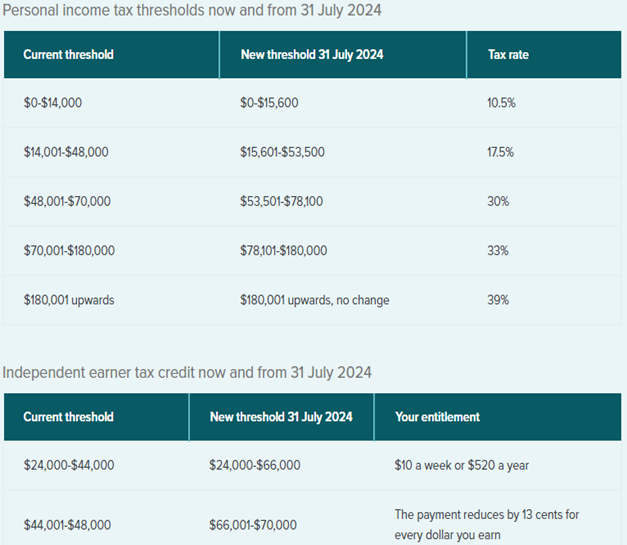
On the 30th May 2024, the Government announced new tax thresholds, from 31st July 2024. Previously, it was indicated these changes would take place 1st July 2024, and this date was amended at announcement.
What do these changes mean for you and your payroll?
The new thresholds have been confirmed, and have been published on the IRD website as follows;
This impacts directly on PAYE values. All wages and Salary payments made on and after 31st July 2024, must have PAYE calculated using the new rates. Pay cycle is not the indicator of which tax tables to use, the pay date leads this. See the example for a weekly payroll below;
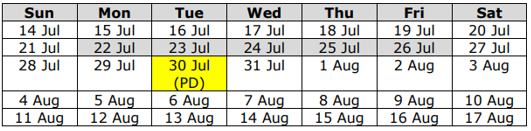
Example 1:
- Works Monday to Friday.
- Is paid the following Tuesday.
- Worked from 22 July to 26 July.
- The pay date is 30 July.
- New tax threshold are not used.
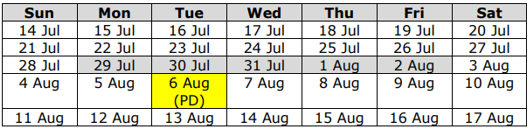
Example 2:
- Works Monday to Friday.
- Is paid the following Tuesday.
- Worked from 29 July to 2 Aug.
- The pay date is 6 Aug.
- New tax threshold will be used.
There are also some components that are not changing until 1st April 2025.
Extra Pays.
Calculating extra pay will still use present tax thresholds and won’t change until 1st April 2025.
Employees may question this, as they may expect less tax to pay. So be prepared to answer why this has not changed.
Use what IRD has stated;
- Using the new thresholds may create underpayment of tax.
- Any issues will be sorted out at the end of year assessment (square-up)
Extra pays include Annual Leave cash ups, Annual & Special bonuses, back pay and lump sum holiday pays (Annual leave paid in advance/beginning of leave period)
Employer Super Contribution Tax (ESCT)
- This will not change on 31 July 2024.
- It will change on 1 April 2025 to reflect personal income tax threshold increase.
What to tell Employees.
- Be proactive, rather than reactive.
- Get information on changes to employees before 31 July so payroll does not get flooded with questions.
- Employees will be looking for additional money, so will question any payment they believe should have been taxed at a lower rate with the new thresholds (such as extra pays, as already addressed in this notice)
- As an example, if you have an annual bonus paid to employees after 31 July 2024, provide employees with information on how this is taxed.
- Use IRD references as much as possible, to back up what you are doing.
Link to IRD – Personal Income Tax Changes
Employee needing to change their tax code.
- The employee must decide if they need to change their tax code based on the changes that will occur on 31 July 2024.
Unless
- Payroll or the employer receives instruction from IRD.
- Payroll and/or the Employer must not involve themselves in advising an employee what tax code they should be using.
- Payroll and/or the Employer must not act as a financial advisor for the employee. If that occurs, and the advice is not correct, it makes the employer liable for any error. Payroll and/or the Employer can only access information regarding what they pay to the employee, so it is not possible to know all their personal financial information
If the employee asks for help, this is what Payroll and/or the Employer can do;
- Direct them to the current IR330 and explain there is step by step guidance on that document.
- Direct them to the IRD website
- Or they can call IRD directly
Our payroll team have undertaken the necessary training, and have obtained the resources required to ensure accurate wage calculations, so our clients can update their payroll information and provide employees with the right information prior to the changes on 31st July 2024.
If you are processed wages client, we will be emailing and posting wage calculations over the coming weeks. We will also be contacting our established advisory clients.
If you have not used our Payroll services in the past, and require assistance in getting this right for your employees, email us on: wages@cooperaitken.co.nz
We are happy to help!
Written by Jane Smith
Payroll Team Lead
P: 07 889 7153
E: wages@cooperaitken.co.nz