Blog

ACC supporting safer farming

ACC supporting safer farming The agricultural industry is still one of the most dangerous industries for New Zealanders to work in as well as one of the most important primary industry and biggest exports in the country.  In 2024, ACC accepted over 17,116 new farming-related injury claims, and spent over $124 million to help people recover from farming-related injuries.  With this horribly accurate data coming to the forefront every year, it was vital that ACC jumped on board and partnered with Farmstrong alongside FMG and the Mental Health Foundation to help give farmers the skills and resources to live well, farm well and get the most out of life.  Farmstrong offers real life solutions and tips from farmers to help farmers better cope with the rollercoaster ride that is farming. New Zealand farmers are amongst the finest in the world, but unfortunately we know that accidents can occur when feeling fatigued, under pressure or stressed.  With an increase in compliance, there is also support and assistance now readily available meaning farmers can get better at putting in systems to look after their most important asset, themselves and those who work in the business.   When farmers are looking after themselves, they can look after their farm too.  Farming presents a vast array of unique challenges which are often hard to predict or control.  These challenges won’t be eliminated anytime soon, and this is why developing good habits are paramount for good performance and good health on and off the farm. ACC have also partnered with Safer Farms an organisation dedicated to safer farming culture in New Zealand and helping to prevent injury and fatalities on the farm.  Injecting over $11 million into the Farm Without Harm scheme over the next five years, ACC are focused on supporting the agricultural sector by mitigating risks, improving safety practices and focusing on protecting our farmers from preventable harm. https://youtu.be/omyn5ty_k5s ACC want to give farmers the skills to identify the risks and the tools to help them become the best versions of themselves with a positive outlook of safety and success.   Farms are unique environments where families work, live and play.  Through these types of partnerships ACC is supporting safe workers, safe workplaces and living well with organisations that know farming. Alongside these farming schemes, ACC also support the following industries: Business Leaders’ Health and Safety Forum – https://forum.org.nz/ Construction Health and Safety New Zealand – https://chasnz.org/ Forestry Safety Industry Council – https://www.fisc.org.nz/ Heath and Safety Association of New Zealand – https://www.hasanz.org.nz/ ShopCare Charitable Trust – https://www.shopcare.org.nz/     Rachael HindmanACC Team Lead p: 07 889 7153e: rachaelh@cooperaitken.co.nz

ACC supporting safer farming Read More »

Hubdoc: Simplifying Financial Document Management

Hubdoc: Simplifying Financial Document Management Managing your financial documents can be a breeze with Hubdoc, an online platform designed to streamline and automate document management. How Hubdoc Works Document Capture: Hubdoc makes it easy to capture financial documents. Users can take photos on their mobile devices, use email, scan, or upload documents directly into Hubdoc. Each organisation has a unique email address for forwarding documents, making it convenient to send invoices and receipts directly to Hubdoc Data Extraction: Hubdoc automates data entry by reading key information from bills and receipts, such as supplier names, amounts, invoice numbers, and due dates. This data is then converted into usable information to create transactions in accounting software like Xero, with the source document attached. Organisation and Storage: All key documents are stored online in one place. Hubdoc sorts invoices into supplier groups and provides a search function that allows users to find invoices with ease. Key Benefits of Hubdoc Time-Saving: Hubdoc takes care of the boring stuff like data entry by automatically pulling key info from your receipts, invoices, and bills. More time for you to do what you love! Real-Time Capture: Snap photos of your documents on the go with your phone, or upload them from your computer or email. Your financial records will always be up-to-date. Stay Organised: Keep all your important documents in one handy digital spot. No more hunting through piles of paper or endless email threads. Making it easier to stay organised and access your financial records from anywhere Accessibility: With all documents stored online, users can access their financial information from anywhere, at any time. This is particularly useful for businesses with remote teams or multiple locations. Compliance: Rest easy knowing your documents are safely stored and backed up, providing peace of mind that your financial information is safe and easy to retrieve. Hubdoc’s secure filing system ensures that businesses remain compliant with document retention requirements, reducing the need for physical storage space. Automation: Hubdoc works seamlessly with accounting software like Xero. Less hassle, more efficiency! Easy Collaboration: Share your documents effortlessly with your accountant. Everyone stays in the loop and on the same page. Tips to help you get the most out of Hubdoc: Systemise Your Document Collection: Create a system for gathering and temporarily storing your invoices and receipts. Use designated folders for items that have been uploaded and those that haven’t, both digitally and physically. This helps keep everything organised and easy to find. Use Email Forwarding: Set up email forwarding rules for regular suppliers. If invoices are sent from specific email addresses or contain certain keywords, you can automatically forward them to your Hubdoc account. This saves time and ensures nothing gets missed. Bulk Uploads: Take advantage of bulk uploading features to save time. You can upload multiple documents at once from your computer or mobile device, making the process quicker and more efficient. Mobile App: Use the Hubdoc mobile app to capture documents on the go. Snap photos of receipts or invoices as soon as you get them, so they’re immediately stored and processed. Integrate with Accounting Software: Make sure to connect Hubdoc with your accounting software like Xero. Regular Reviews: Periodically review the documents in Hubdoc to ensure all data has been correctly extracted and categorised. This helps maintain accuracy and prevents any issues down the line. Is there anything specific you’d like to know more about? Get in touch with the team! TestimonialsMany users have praised Hubdoc for its ability to automate bookkeeping workflows and eliminate data entry. Testimonials highlight the significant time savings and the value Hubdoc brings to creating efficient financial processes. “Hubdoc is an essential tool for businesses looking to streamline their financial document management. Its ability to capture, store, and organise documents, coupled with automated data extraction, makes it a valuable asset for any business aiming to improve accuracy and efficiency in their administrative processes.”   Louise Maxwell-GranichClient Manager + Chartered Accountant p: 07 888 8002e: louise@cooperaitken.co.nz 

Hubdoc: Simplifying Financial Document Management Read More »

The end of another financial year is fast approaching….!

The end of another financial year is fast approaching….! We have put together our top tips to ensure you are ready for the end of the financial year and the year ahead. 1) Get your records ready Bank and Loan statements – Confirming your account/loan balances and interest rates Accounts Receivables – Don’t pay tax on money you won’t receive! If you have done all you can to recover a debt and are ready to write them off, you need to make sure this is done before your balance date for the tax deduction to apply. Accounts Payables Stock on Hand Shares investments in other companies Hire Purchase agreements and repayment schedules with all information relating to the finance  Invoices for asset purchases, large repairs & maintenance items and insurances paid Depreciation Schedule have a look over your 2024 depreciation schedule and advise us of any assets you no longer have or any that need to be written off Any changes to your family situation, which can affect your entitlement to family assistance Any donation receipts for donations made to registered charities, public schools and religious organisations throughout the year. Alternatively, these can now be uploaded to myIR as you go. Anything on your balance sheet, we require third party confirmation, if you’re unsure and would like a specific list of what we will require for your business, please let us know. 2) Home officeIf you use part of your family home for work, a portion of your home expenses can be claimed as a business expense. This can include expenses such as rates, insurance, power and mortgage interest. The portion you can claim relates to the area of your home that you use for business, being the total area of your house along with the total area of the space set aside for work related tasks. 3) Stock on HandFor commercial clients, if you carry stock of more than $10,000 then you will need to complete a stock take so we know the value of the stock you have. It’s important to get this right as stock can heavily affect your profit, and therefore tax. When completing the stock take we need the GST exclusive figure. This can be either a physical stock take, or if you have an inventory system, the value can be found there. For farming clients, a physical stock count needs to be undertaken on balance date, noting the ages and classes of animals. Alternatively, electronic stock records like NAIT records can be provided. 4) Consider your goals for the upcoming yearAs the end of another financial year approaches, we encourage you to work with our team and together, we can help your business thrive! It’s important to reflect on the year that was, and look ahead to where you would like to go. We are here to help, whether it is setting goals, preparing a budget, succession planning, business planning, cash flow and profit improvement or business advisory and more. 5) Make next years record keeping easier and more efficient Retaining records and providing information can often be viewed as a frustrating task, this process can be made easier and more efficient with the use of proper accounting systems and technology. Rather than using a physical folder to file all of your documents, there are now many cloud-based software’s that allow you to upload the information as you go, meaning we will not need to request as many documents from you as we once did. Anything obtained throughout the year or uploaded to your accounting software does not need to be provided to us again. Accounting software also makes record-keeping much more relevant, less time consuming, and is also space saving!   Louise Maxwell-GranichClient Manager, Chartered Accountant p: 07 888 8002e: louise@cooperaitken.co.nz 

The end of another financial year is fast approaching….! Read More »

What does Fonterra’s on-farm emissions reduction target mean?

What does Fonterra’s on-farm emissions reduction target mean? Recently Fonterra released its 30% intensity reduction for on-farm emissions by 2030.  Many farmers will be asking “what does this mean for my farm”. I’m going to break this down for you. First, you need to understand what emissions intensity is. Emissions are predominately reported two ways: absolute emissions or emissions intensity. Absolute emissions refer to the total amount of GHGs being emitted from your farm. This is reported on a per hectare basis and can be found in your Insights report. Times that number by the effective area of your farm and you get your farms absolute emissions. Reducing absolute emissions is what the previous government was proposing legislation for. Emissions intensity is the amount of emissions produced per unit of product. For milk this is kilograms of milksolids i.e. 12.9 kgCO2e/kgMS. What this means is that you can reduce emissions via implementing efficiency gains, i.e. produce more milk with the same amount of cows. This could mean managing mastitis and lameness better so more milk goes in the vat. Try to look at this as reducing wastage in your farm system rather than an additional cost. Next, how are you going to reduce your farms emissions intensity by 30%? First this reduction is from a 2018 baseline.  So, reducing what was being emitted in 2018. There are four areas that Fonterra are applying this target to; 7% reduction from on-farm actions. This can be achieved through implementing best management practices. As this is a reduction of emissions from 2018 levels, farmers have already achieved 2% so this requires a further 5% reduction. 7% reduction from novel technology. While there is nothing on the market yet, it is expected there will be a number of innovations on the market by 2030. This includes technologies such as vaccines and other methane inhibitors. 8% from carbon removals from existing or new vegetation. If plants are growing between 2018 and 2030 they will be storing carbon and will be counted towards the target. Different species have different carbon storage capability, and more information on how carbon sequestration will be counted is still to be released. You will not be able to double count carbon sequestration i.e. if you have some forest in the ETS, this will not be able to be counted towards your Fonterra target as well. 8% from historical land use change. This considers lower rates of conversion of forestry land to dairy land since 2010. Dairy has a 20-year responsibility for the emissions released from the loss of forestry during this time which will end before 2030. Individual farmers aren’t responsible for the 8% historical land use change target, therefore the 30% emissions reduction target drops to 22%. Finally, this is a collective target not an individual target, so one farmer may reduce their emissions from carbon sequestration by 12% compared to the farmer next door may only reduce theirs by 4%. Collectively their emissions have reduced 8% for carbon removal and meet the target. So where do you start.  First, know your numbers.  These can be found in your farms Insights report. For now, the best place to focus your energy on is reducing emissions through implementing best practice measures until further information is available on novel technologies and exactly how carbon removals will be measured. Fonterra have some great resources for on farm actions available online or in your local Farm Source store or talk to your rural professional. more on checkbox back to all blogs

What does Fonterra’s on-farm emissions reduction target mean? Read More »

How do I pay my relief milker?

How do I pay my relief milker? One of the most common queries coming across the Payroll desk is “How can I pay my relief milker?” Some relief milkers will refuse to accept work unless paid in cash, ‘under the table’, and this puts the employer in a difficult position. Someone is needed to do the work, but if the employer yields to this request, then the PAYE is not paid, the wage expense is not claimable, and another employer is pushed into the cycle of black market wages. Not a desirable method, as non payment of tax can have another name – tax evasion. For the purposes of addressing this matter, payments made to a relief milker are treated as per Section RD 3 of the Income Tax Act 2007, PAYE income payments are salary or wages (i), or Schedular payments (iii). In layman’s terms – if you make these type of payments, you have to pay the tax man. Wages are paid to the employee, with PAYE and ACC Earner Levy deducted. Employees need to complete an IR 330. They may use a CAE tax code. Be prepared to pay ACC Premiums, as these go hand in hand with the responsibilities of being an employer. For a sole charge farmer, looking to have some precious days off, these are administrative costs and duties that make the whole arrangement seem undesirable. The sole charge farmer may wish to consider paying a relief milker who is set up for Schedular Payments. Schedular payments are paid per invoice. Relief milkers on Schedular payments are deemed to be Contractors and will need to complete an IR 330C. Typically, the relief milker performs their duties, and then hands over an invoice, which will have a Withholding Tax amount recorded as well. This WT amount is payable to the IRD in much the same way as PAYE deductions. This does not trigger the need for associated ACC premiums. The relief milker purports to be in the business of relief milking, and therefore manages their own ACC. If there is no WT amount on the invoice, ask to see their Tax Exemption Certificate. If there is no certificate, then deduct 15% WT and pay to the IRD by the 20th of the following month. The Tax Exemption Certificate is not something that is ‘lost in the mail’. If it is not in the hand of your contractor, treat it like it does not exist,. GST or not GST? That is the question? Your contractor relief milker does not need to be registered for GST, especially if they are projected to earn less that $60,000 per year from there contractor earnings. If they are registered – great! If not, do not push it as a deal breaker. Your relief milker is more likely to remain happy with their line of work if they are not burdened with unnecessary administrative tasks and expenses themselves. GST registration will come as they become more at ease with their craft and gain more clientele, and thus, more income. In summary, don’t get sucked in to the black hole of under the table relief milkers, support good, reliable relief staff that want to be part of a successful industry and don’t let GST registration get in the way of a loyal, albeit occasional, member of your farming team. The CooperAitken Limited – Payroll Division is available Monday to Friday, 8.30am to 5pm, to attend to your payroll queries. We are happy to help! contact our payroll team

How do I pay my relief milker? Read More »

Employee injuries at Christmas Parties

Employee injuries at Christmas Parties As an employer are you liable to pay first week ACC if your employee injures themselves at the work Christmas Party? Short answer, no. If an injury has taken place at a work party or event ACC would class this as a social event meeting. Therefore, it wouldn’t fall into the work-place accident category. However, it is important to keep in mind that company health and safety policies extends to any social event organized by the company. Even if that’s offsite and outside of normal working hours. Work Christmas parties are a kiwi tradition, and with a little planning you can ensure it is a fun and safe event for all! Here are some quick tips to help this holiday season: 1. Transport Plan transport in advance for anyone who will be drinking. This minimizes the risk of anyone having too many and getting behind the wheel. 2. Do something fun! Having some games, or an activity is not only great for team building but it also provides something fun to do. 3. Food and Drinks Ensure there are plenty of non-alcoholic beverages and food available, especially when alcohol is being served. 4. Communicate expectations. It’s a great idea to advise your employees that even though they aren’t at work they still need to conduct themselves appropriately at these events. contact our payroll team

Employee injuries at Christmas Parties Read More »

My employee came to work on Boxing Day, but left early due to illness, how do I pay them?

my employee came to work on boxing day, but went home sick… Ask any employer that needs to operate their business on a Public Holiday, and you can almost guarantee that at some point, a team member has come in to work their Public Holiday and have needed to finish early due to illness. We know that ordinarily, an employee works a Public Holiday and are then entitled to time and a half for each hour worked, and an Alternative day off, so they can enjoy some down time at a later date. But what if only part of the day is worked? How is this scenario managed? To explain best practice, I am going to use the following scenario; Joe Bloggs works Mon to Fri. Their employment agreement states they are required to work a Public Holiday that falls on any day Mon to Fri. There is no detail in the Individual Employment Agreement stating that partial sick days are allowed. Joe starts work at 8am, and by 12pm, Joe tells his manager they need to leave, as they are not feeling well. Joe’s Sick leave management falls directly under the Holidays Act. Because Sick Leave under the Holidays Act is a full day, not a part day, providing a half day sick does not fit with the requirements of the Holidays Act, and the employee would lose a full day of sick leave entitlement. Therefore, the correct treatment will be; Employee gets paid 1.5 x 4 hours, an alternative holiday for the public holiday worked, and 4 hours paid based on a Public Holiday Taken. Providing a Public Holiday Taken because the employee was at work and then went home sick on a public holiday fits the theme of how other leave is not used on a public holiday, under the act. In conclusion – a public holiday is a public holiday for an employee and any other type of leave provided under the holidays act is not applied on that day. Contact our Payroll team

My employee came to work on Boxing Day, but left early due to illness, how do I pay them? Read More »

Why farm compliance matters

Looking at farm compliance as a cost to your business is now an outdated view.  While it may not be creating value, it is protecting the value of your business, with multiple financial implications for not complying with regulations today. These include; fines for breaching regulations, missing out on premium payments from Farm Assurance Programmes (like Co-operative Difference), higher ACC levies, lower farm sale value, and now banks are starting to pay more attention to how you manage compliance. Regulations Regulations that have been in place for years, such as discharging effluent to land, has seen farmers fined $35,000 for one-off breaches, and up to $80,000 or higher for repeated offences. The stack of new freshwater regulations introduced over the last few years hasn’t resulted in fines issued yet, with the Regional Council currently taking an educational approach, however, this won’t last forever.    Breaching the Health and Safety Act can result in fines of up to $280,000 for employees seriously injured or killed on farm.  Reparations on top of that could be over $100,000 depending on the extent of the injury. Insurance cannot be claimed for fines given under the Health & Safety Act. Breaching the newly introduced Water Services Act by supplying unsafe drinking water could result in fines of up to $300,000 for individuals and up to $1.5 million for a company if found negligent, even more if it was found to be through reckless behaviour.  If you fail to register your water supply, you can receive a fine of up to $50,000 for an individual or $200,000 for a company. If you’re not aware, you are a water supplier if your water source supplies more than one household.  This a new act and is yet to be tested in the courts, so it will be a wait and see to see how fines are administered. ACC Having a healthy and safe workplace is likely to have fewer claims and staff days off. ACC is encouraging businesses to further prioritise the health and safety of people by offering financial incentives. After three years of paying a work levy, you can receive discounts or penalties depending on the number of claims you have had, or not had. Other Health and Safety incentives include not having the cost of a staff member unable to work on farm, reduce R&M costs of farm equipment and lower insurance premiums. Assurance Programmes With consumers increasingly wanting to know if their milk is ethically produced, not only environmentally but also regarding how farmers are treating their staff and animals, milk supply companies are paying premiums to reward farmers that produce high quality milk.  Generally, many of the requirements for farm assurance programmes are what is legally required anyway, and they help to maintain a farmer’s social licence to operate. Not participating in these programmes means you miss out on much needed additional income. Farm values A recent report into the dairy property market by Colliers Rural Valuation shows farms that have a good approach to compliance are achieving higher sale prices.  These farms are providing a clear indication to potential buyers that they can sustain current farming practices well into the future, giving buyers certainty. Banks Banks are no longer just taking the book value of a business into account when assessing interest rates and loans,  they are also assessing your individual risk.  Your compliance with on-farm regulations is playing an increasingly important role. Loans are starting to be declined based on environmental non-compliance. There aren’t huge numbers yet, but a client of ours recently  experienced this with their bank, so we know it is starting to happen.  Managing the risk around non-compliance helps protect your farm’s value as well as income now and into the future. In many cases you are already complying with regulations, the only thing you need to do is prove it.

Why farm compliance matters Read More »

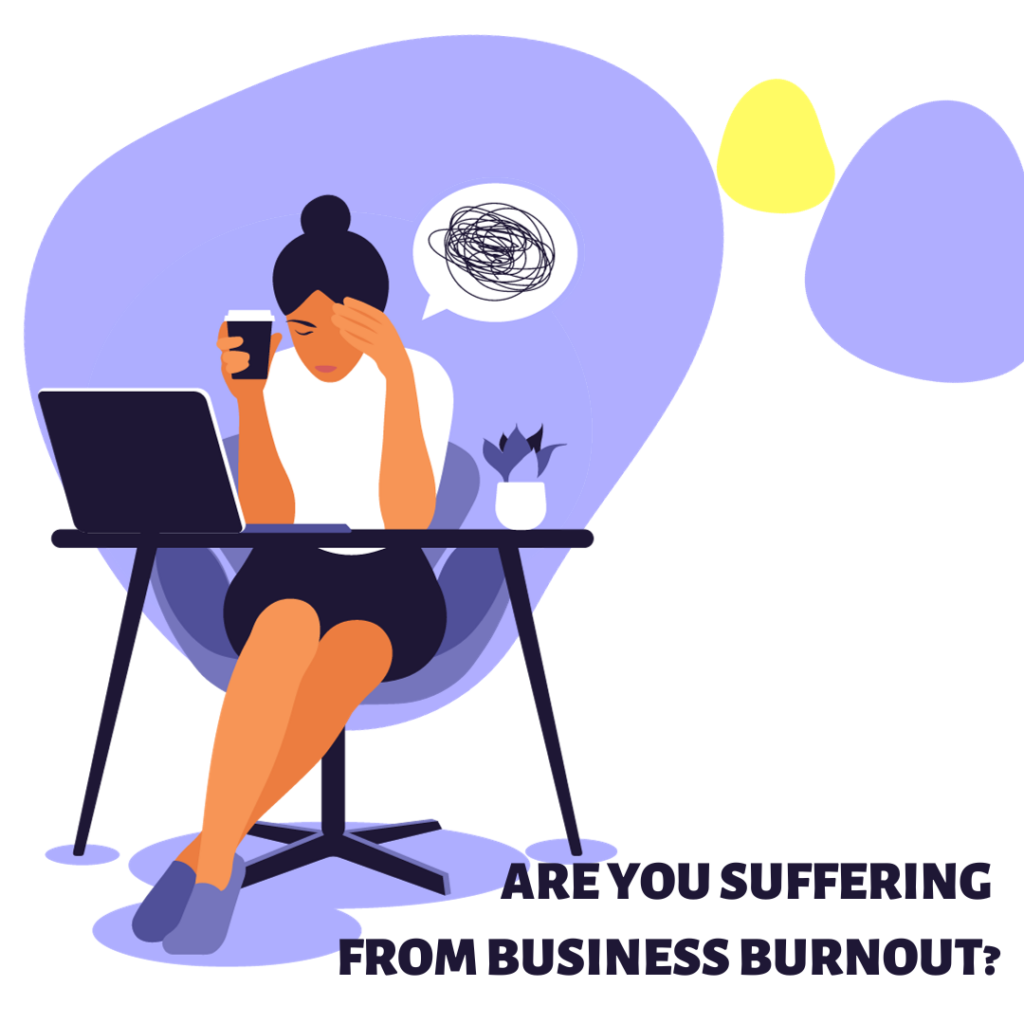
Are you suffering from business burnout?

Are you feeling burned out from business?The last three years have been demanding and exhausting for many business owners. The challenges have been relentless, and we know many small business owners have had to navigate unprecedented demands because of the pandemic and related government regulations. Burnout results from long-term stress and can manifest in emotional and physical exhaustion, which may affect your enthusiasm for running the business you once loved. What can we do about burnout? We understand that as a business owner, you have many responsibilities, and often you do everything on your own. So we know how hard it can sometimes be to keep on top of all your obligations. The most important step is to acknowledge you feel burned out and need a break. Take a break as soon as you can. Plan ahead for some time away from the business. However, while getting some rest in the short-term will help, long-term stress will take commitment to recover from. What can you do differently to avoid prolonging or retriggering the burnout? Here are some strategies to help with burnout; Delegate – Look at the low-value tasks you spend time on – can you out source some of these tasks? This will help free up some time and energy. Stand back – Take an objective look at how much you are working and how effective you are. For example, is it time to streamline your work activities and put boundaries around working hours? Reassess your goals – Do you have clear business goals for the short-term and long-term? Either set some realistic goals or revise them if they are too difficult right now. Re-energise – If you’re struggling with a lack of enthusiasm or purpose, talk to colleagues, a business coach, a farm advisor or even a friend for support. If possible, connect with people in the same industry so you can share among others who may be facing similar challenges. Commit to some regular self-care actions – Think about what you love doing outside your business that is nourishing. Regular exercise? Time in nature? Going on a retreat? Learning something for fun? Improving your diet? Get an app on your phone that reminds you to take mini breaks throughout each day. Whether that is movement, mindfulness or music, use technology to help. Celebrate milestones and achievements – When overwhelmed with stress or exhaustion, it’s easy to forget the positives. Remind yourself of just how much you have done in the last year! Need Some Support? You’ll be better able to face challenges, run your business well and assist others if you are looking after yourself well. If you’re feeling burned out and need help in managing systems, technology, payroll or any other financial planning, strategy or management, give us a call. We’re here to help and can guide you back to passionate engagement with your business. Some helpful resources for business support; Ministry of Business, Innovation & Employment – Support for businesses EAP Services – Support for organisations Rural Support Trust – Help & Support for Rural People Business.govt.nz – Resources & support for businesses

Are you suffering from business burnout? Read More »

Keeping the cash flowing into your business

Our business environment has been challenging for some time, and it is likely to continue in the near future. There are pressures with rising costs from suppliers, wage costs increasing, and an inability to attract new employees, just to name a few. Being an election year business owners have elevated levels of uncertainty with potential changes to policies that affect their livelihoods, family, and their staff.  There are many external factors that we cannot control such as rising interest rates, inflation, and a tight labour market. So, let’s focus on looking inward at our own businesses and see what we can improve to alleviate some of this pressure.  This article looks at ways to improve cash flow into your business from customers, focusing on your accounts receivable and reducing the time it takes for you to get paid. Reassess your customer payment terms Many commercial businesses follow conventional payment terms of payment being due by the 20th of the month following the invoice date.  Traditionally invoices would be sent by post at the end of the month with the due date being the 20th of the month, this gave people enough time to post their payment by cheque to their suppliers.  Technological advancement has seen invoicing processing time shrink considerably so you could look to reduce the payment terms to 14 or even 7 days following invoice date.  In terms of money entering your bank account how much would this change impact your cashflow? An example of how this benefits your cash flow is if you completed a job on the 4th of the month and billed it to your customer by the 6th of the month you could expect payment on the 20th that same month, this shows a cash conversion cycle of 16 days. If you kept the status quo then you could be waiting for payment until the 20th of the month following, this adds 31 days until you are paid for work completed.    If your bank balance is currently in overdraft then you are effectively paying the bank interest while you wait for customers to pay you. Would you be happy to discount your customer’s bill by the current interest rates being charged, say 15%?  In a way you are wearing the 15% interest cost of these credit terms.  In order for you to be able to achieve this potential cash benefit you would have to ensure your team has the capacity to generate an invoice promptly following the sale or completion of work.  If not, then perhaps a streamlined invoicing process is another key area of focus to consider.  Give customers ease with payment options These days there are many options for securing payment from customers.  Most people have access to Internet banking apps on their phones and can pay bills from anywhere and at any time.  The major banks now process money transfers seven days a week. This is good news for everyone as cash is flowing quicker than ever before. Put yourself in the place of your customer – what options are there for paying your business? Do you offer multiple payment methods? Here are some common ones to consider: Online banking – provide bank account number on your invoice or statement and the customer can pay at any time that suits them. Payment by eftpos or credit card – either at your business premises or mobile Direct debit – great for ensuring payment is received on time. Online – include links on your invoice to a payment service provider to process credit card payment or offer POLi for direct bank transfer Website – add a ‘pay now’ function on your website Cash – if you receive cash it is best practice to provide a receipt to your customer either electronically or from a carbon copy receipt book.  The goal is to make it convenient and easy for customers to pay. Asking for a deposit for sales where you agree on the price prior to starting the work is a great way to help with cashflow. The above-listed payment methods are not without risk or cost. Credit card and Paywave attract merchant and bank fees and a cash handling fee can be charged when depositing cash. In the world in which we operate, this is a cost of operating a business. Choose the options that you prefer once considering the cost and risks of each method. Talk to your customer There are  tools available to remind customers to pay their account such as end-of-month statements, automated invoice reminders, and charging late payment fees or interest to overdue accounts. These are often effective methods to trigger a payment response from customers.  When these tools are not enough it is important to phone and talk to your customer. Often a few minutes talking to your customer will result in action from them. Take a proactive and empathic approach to this.  It can be easier to ignore automated statement reminders whereas by talking with a customer you can help clear up issues. If you are willing to agree to a payment plan this can be preferable to the non-payment alternative. Note with payment plans there is a delay in when you receive payment, therefore you may wish to add interest to a payment plan to account for this delay. Getting paid on time is one important part of improving your cash inflows. Having money coming in when it is expected helps alleviate pressure and helps with your ability to pay your bills when they are due. Set aside time to regularly review your accounts receivable and be proactive with overdue accounts. Challenge yourself to put some time into assessing what changes you could make to improve the time between sale and payment. We want you to get paid for your hard work and effort. Please reach out to us if you want a sounding board or further advice on how to improve your current payment terms or methods.  Eddie Maber, Accountant.   Returns to

Keeping the cash flowing into your business Read More »

Scroll to Top